On Indiana Fever opening day, Iowa nonprofit lawyer Gordon Fischer shares twenty-two (22) governance lessons every Iowa nonprofit can learn from Caitlin Clark — from Articles and Bylaws to DEI and Social Media Policies.

On Indiana Fever opening day, Iowa nonprofit lawyer Gordon Fischer shares twenty-two (22) governance lessons every Iowa nonprofit can learn from Caitlin Clark — from Articles and Bylaws to DEI and Social Media Policies.

May 9, 2026

By Gordon Fischer

Today at noon Iowa time, Caitlin Clark and the Indiana Fever open the 2026 WNBA season against the Dallas Wings at Gainbridge Fieldhouse in Indianapolis. First game. Fresh start. New season.

I am PUMPED.

Last season was rough. A groin injury. An ankle sprain. Two separate quad strains. Just thirteen (13) regular-season games for Clark. And yet a Fever team carrying that injury list still pushed the reigning champion Las Vegas Aces to five (5) games in the semifinals. They went down swinging in overtime in Game Five. They earned every minute of this offseason.

And here is where I am going to make a turn that will surprise no one who reads this blog.

Iowa nonprofits, that was a lot of you, too.

Federal funding has wobbled. State funding has wobbled. Tax and regulatory expectations have kept changing. DEI has been under intense pressure. Long-time leaders have retired. Donor bases have aged. Many of you have spent the past twelve (12) to eighteen (18) months absorbing hits while still showing up for your communities. You are healthier now than you were six (6) months ago. You are ready to think about what the next year looks like. Clark wears number twenty-two (22). She wears it because she was born on January 22, 2002, and the number followed her from Iowa to Indiana like a second name.

So in honor of opening day, here are twenty-two (22) lessons your Iowa nonprofit lawyer has learned watching Caitlin Clark — first at Iowa, now in Indiana — and how each one applies to the Iowa nonprofits I have spent thirty (30) years working with, from Atlantic and Belle Plaine to Williamsburg and Zwingle and everywhere in between.

Twenty-two (22) is her start. Let it be your start, too.

PART ONE: PREPARATION (Lessons #1–#5)

Clark was playing in boys’ rec leagues at age five (5) because her dad could not find a girls’ league. She was playing several years up by age thirteen (13). The work was done before the spotlight ever arrived.

For your nonprofit, the equivalent of those early-morning gym sessions is your Articles of Incorporation and your Bylaws, adopted by your board. The legal foundation that makes everything else possible. If yours were copied from another organization, copied from another state, or last touched a decade ago, you are playing on a cracked court.

Lesson #2. Read the rulebook before tip-off.

Clark did not show up to her first WNBA game and discover the three-point line was a different distance.

Pros know the rules cold.

Iowa nonprofits operate under Iowa Code Chapter 504, the Revised Iowa Nonprofit Corporation Act. Federal tax-exempt nonprofits operate under Section 501(c)(3) of the Internal Revenue Code. Every officer and director should know what those two (2) bodies of law expect. Not memorize them. Know they exist, know what they cover, and know who to call when a question comes up.

Lesson #3. The playbook lives in writing.

Coaches do not run plays from memory. They draw them up. They write them down. They review them before the game and during it.

Your nonprofit’s playbook is your Bylaws, supported by your full set of governance policies. If your board cannot point to where it says how meetings are called, how votes are counted, or how officers are elected, you are running plays from memory. That works fine until it doesn’t.

Lesson #4. Conditioning matters more than highlight reels.

The reason Clark could play forty (40) minutes in the WNBA semifinals is the same reason she could play forty (40) minutes in the Big Ten Tournament — years of cardio, weights, film study, and rest. Highlight reels happen because conditioning happened first.

Conditioning for a nonprofit is your Financial Policies and Procedures. Who approves spending. Who signs checks above what amount. Who reconciles the bank account. Who is allowed to make a wire transfer. Boring, repetitive, every single day. And if you do not have it, you may not survive a hard year.

Lesson #5. Know the season schedule before the season starts.

The Fever’s 2026 schedule was published months ago. Forty-four (44) games. Every tip-off. Every opponent. For your nonprofit, the equivalent is your IRS Form 990 Review Policy – knowing when Form 990 is due, who prepares it, who reviews it, and how the board signs off before it is filed. Form 990 is a public document. Major donors read it. Foundations read it. Reporters read it. Treat it like a championship game and prepare accordingly.

PART TWO: ACCOUNTABILITY (Lessons #6–#10)

Iowa basketball did not get Iowa basketball by hoping. It got there by being honest about what was working and what was not.

Lesson #6. Disclose conflicts before someone else discloses them for you.

When Clark signs a name, image, and likeness deal, it gets disclosed. Publicly. Up front. Your nonprofit needs the same instinct, captured in a Conflict of Interest Policy. A board member with a financial stake in a vendor. An officer whose spouse runs a competing organization. A donor whose family business is up for a contract. None of these is automatically a problem. All of these are automatically problems if there is no policy, and they remain undisclosed.

Lesson #7. Pay people fairly and write down how you decided.

WNBA salaries are public. So are nonprofit executive salaries. Your Compensation Policy explains how your board decides what to pay people, what comparability data it uses, and how conflicts are handled when the board sets executive pay. Donors, regulators, and your own staff can all read your Form 990. Make sure the answers add up.

Lesson #8. Protect the people who tell the truth.

Every team needs the player who will say “that play isn’t working.” Every nonprofit needs the staff member or volunteer who will say “that grant report doesn’t match what we actually did.” Federal law makes it a crime to retaliate against someone who reports suspected wrongdoing to law enforcement. A Whistleblower Policy creates a clear, trusted internal process for raising concerns and explicitly protects people who come forward in good faith. If your nonprofit does not have one, the people who notice the problems may stay quiet.

Lesson #9. Decide which gifts you will accept before someone offers one you cannot refuse.

Caitlin Clark won’t accept just any endorsement. She has standards, contracts, and people who help her say no. Your nonprofit needs the same instinct in writing — a Gift Acceptance Policy. This is the document that lets you politely decline a piece of contaminated real estate, a closely held business interest with no buyer, or the well meaning donor who wants to give you a racehorse. (Yes, that has actually come up.)

Lesson #10. Know what is public and what is not.

Some things about Clark are public — her stats, her contract, her endorsements. Other things are not — and her team is no doubt clear about the difference. Your nonprofit needs a Public Disclosure Policy that explains which documents must be made available on request (Form 990, your IRS determination letter, your Form 1023) and which stay internal. Transparency is not the same as oversharing.

PART THREE: STEWARDSHIP (Lessons #11–#15)

Caitlin Clark’s career is not just about scoring. It is about taking care of what she has been given — her talent, her platform, her teammates. Stewardship is the quiet half of greatness.

Lesson #11. Save the receipts.

Champions document everything. So should nonprofits. Your Document Retention and Destruction Policy (sometimes called a DRD Policy) tells you what to keep, how long to keep it, where to keep it, and how to securely destroy it when the time comes. It covers paper records and electronic records, including emails and text messages. Without one, you keep everything forever (a privacy and storage problem) or throw things away too quickly (a legal and audit problem).

Lesson #12. Protect what was entrusted to you.

Donor information. Beneficiary information. Personnel records. Board deliberations. People share things with your nonprofit because they trust your nonprofit. A Confidentiality Policy defines what is confidential, who is responsible for protecting it, and what happens when confidentiality is breached. Confidentiality is not about hiding things. It is about protecting people.

Lesson #13. Invest with intention.

I’ll bet Clark’s 2025 injuries forced her to think long-term. Iowa nonprofits with reserves or endowments should think the same way about their assets. Your Investment Policy defines who makes investment decisions, what risk tolerance is acceptable, how performance is measured, and how the board exercises oversight.

Lesson #14. Raise money the way you would want to be asked.

Almost every Iowa nonprofit raises charitable funds in some form. A Fundraising Policy addresses compliance with local, state, and federal laws and the ethical norms your nonprofit chooses to follow. It covers both soliciting donations and receiving them. It is the document you reach for when a donor asks something you have not been asked before. It is also how you keep the values of your mission inside the way you ask for support.

Lesson #15. Pull up the mission and read it out loud.

At least once a year. At a board meeting. Out loud.

Ask whether your mission statement still describes what your nonprofit actually does. If it does, recommit to it. If it does not, fix it. A mission statement that no longer matches the work is a surprisingly common issue.

PART FOUR: COMMUNITY (Lessons #16–#22)

Caitlin Clark is the most famous basketball player in Iowa history, and she still goes home, still texts her high school coach, still wears the jersey that says where she came from. Greatness is local before it is national.

Lesson #16. Take care of the people who do the work.

If your nonprofit has even one employee, you need an Employee Handbook. It is your culture in writing. It covers anti-discrimination, harassment, benefits, time off, remote work, technology use, and at-will employment. It should include a clear acknowledgment form and language reserving the right to update policies. A good handbook reduces or even eliminates conflict before it starts.

Lesson #17. Get individual roles in writing.

Different from the Handbook. Employee Agreements are individual contracts. They define the role, the compensation, the benefits, the review schedule, the termination conditions, and any non-compete or dispute resolution provisions. Especially critical for executive directors and other senior roles.

Lesson #18. Classify workers correctly.

If your nonprofit works with freelancers, consultants, or contractors, get the relationship in writing through Independent Contractor Agreements. Iowa has strict rules on worker classification. Misclassifying a worker as an independent contractor when they should be treated as an employee creates tax, insurance, and even potential criminal exposure. This is one of the easiest mistakes for a small Iowa nonprofit to make and one of the most expensive to fix.

Lesson #19. Honor your volunteers.

If your Iowa nonprofit relies on volunteers — and most do — you need a Volunteer Policy. It covers role descriptions, time expectations, training, code of conduct, confidentiality obligations, liability and insurance considerations, and emergency contact information. A Volunteer Policy protects your volunteers and protects your organization. It also makes volunteer onboarding feel like joining something serious instead of just showing up.

Lesson #20. Post like the world is watching, because it just might be.

Clark has no doubt drafted a tweet, thought better of it, and never hit send. A Social Media Policy covers who posts, what they can post, what is off-limits, how donor information is handled online, and what happens when a staff member’s personal post creates an organizational problem. Every Iowa nonprofit has a social media presence. Most do not have a Social Media Policy. That gap could be where the next crisis lives.

Lesson #21. Stand for who you serve.

I am aware that DEI is under intense scrutiny right now. That is exactly why a thoughtful, written, mission-aligned Diversity, Equity, and Inclusion (DEI) Policy matters more than it did three (3) years ago, not less. A DEI Policy is not a slogan. It is a commitment to fair hiring, equitable pay, transparent promotion, and inclusive board recruitment, written down in your organization’s own voice. It tells your staff who you are, your donors who you are, and your community who you are. Iowa nonprofits should not abandon this work because the political weather has changed. Your fave nonprofit’s mission did not change.

Lesson #22. Celebrate the people who got you here.

Clark wears number twenty-two (22) because she was born on January 22, 2002. But she got to be Caitlin Clark because of everyone around her — the family that stood courtside through every game, the West Des Moines coaches and teammates and AAU programs that built her before anyone outside Iowa was paying attention.

Your nonprofit has the same kind of people. The founding board members. The first donor who said yes when you had nothing to show. The volunteer who has been there for fifteen (15) years. The staff member who took the pay cut because they believed in the mission.

Write them into your annual report. Read their names at the gala. Put them on the wall. That is governance, too. That is what twenty-two (22) is really about.

Why Twenty-Two (22)? Why Now?

You did not choose your founding date. You did not choose the year a federal program got cut, or the year a longtime donor passed away, or the year your executive director announced retirement. The calendar handed those things to you.

What you get to choose is how you react. Whether they become the start of something stronger or the end of something tired. Whether the offseason becomes the year you finally got the goals right, or the year you ran out of time.

Today at noon Iowa time, Clark and the Fever face the Dallas Wings in both teams; opener. I hope your nonprofit is ready for its own opening day.

Need Help Getting Your Twenty-Two (22) in Order?

I draft, review, and revise full governance packages for Iowa nonprofits, including Articles, Bylaws, core policies, and more. I offer a free one-hour consultation to any Iowa nonprofit. No invoice. No catch. Just help.

Email me anytime: gordon@gordonfischerlawfirm.com
#GoCaitlinClark #GoNumber22 #GoFever #GoHawks

discussion over table with laptop

Imagine I’m working with a great new client named Daphne. She wants to found a nonprofit organization to assist at-risk youth in her local community and across Iowa. This is a hypothetical memo I would send to Daphne outlining the steps of what it takes to form a nonprofit in the state of Iowa. (Note, if you’re looking to form a 501(c)(3) it’s best work with a qualified attorney for advice and counsel specific to your situation and goals.)

To:                  Daphne Downright – SENT VIA EMAIL
From:             Gordon Fischer (gordon@gordonfischerlawfirm.com)
Subject:         How to Form a 501(c)(3) Nonprofit
Date:              April 13, 2019

Dear Daphne:

Good afternoon! I very much enjoyed our phone conversation of this morning, where we discussed your intent to begin a nonprofit to assist at-risk youth. Certainly this is an noble mission and I have no doubt that you could make a big impact. I also acknowledge you are very busy and don’t have the time to allocate to dealing with all of the documentation. So, I’m here to take this stress off of your plate!

Let’s recap some details regarding the process for founding a nonprofit organization. These steps will set your public charity up for the best possible success.

Main Steps to a 501(c)(3)

To recap what we talked over, forming a 501(c)(3) involves four steps:

  1. drafting, editing, and filing articles of incorporation;
  2. drafting and editing bylaws, with new board members then voting in favor of the bylaws in a duly authorized meeting;
  3. applying for an Employer Identification Number (EIN); and
  4. drafting, reviewing, and editing the IRS non-exempt status application, known as IRS Form 1023, as well as all the supporting materials IRS Form 1023 requires.

By far, the most difficult and time-consuming of the four steps is the IRS Form 1023. You should definitely review the form immediately, so you can gain a sense of the level of detail and involvement it requires.

How much does it cost?

While my regular hourly rate can go up to $300 per hour, I often have agreed with clients to perform all the legal work required to successfully begin a nonprofit for a flat fee of $4,800. I typically bill this over the span of five months, i.e., five easy payments of $980, due on, say, the first of each of the months.

Additionally, as you would expect, this matter will necessitate payment of filing fees to governmental agencies, such as the Iowa Secretary of State’s Office and the IRS. (The Iowa Secretary of State has a $20 filing fee, and the IRS 1023 Form has a $850 or $400 filing fee depending on the amount of gross revenue expectations). Of course, clients are solely responsible for payment of all such governmental fees.

How long does this take?

It usually takes a few months to pull all the paperwork together, including and especially Form 1023. I’ve had, however, ambitious clients who wanted to do it much faster, and I was able to accommodate. The flat fee includes as many conferences with me as you reasonably need for us to complete steps 1-4, above.

Benefits of Nonprofit Formation

Daphne, the benefits of a 501(c)(3) are many and include:

Tax exemption/deduction

Organizations that qualify as public charities under Internal Revenue Code 501(c)(3) are eligible to be completely exempt from payment of corporate income tax. Once exempt from this tax, the nonprofit will usually be exempt from similar state and local taxes.

Even better: if an organization has obtained 501(c)(3) tax exempt status, an individual’s or company’s charitable contributions to this entity are tax-deductible.

Eligibility for public and private grants

Nonprofit organizations can solicit charitable donations from the public. Many foundations and government agencies limit their grants to public charities.

Being able to offer donors income tax charitable deductions for donations, as well as eligibility for public and private grants, are probably the two major reasons folks want to obtain 501(c)(3) status.

Formal structure

A nonprofit organization exists as a legal entity and separate from its founder(s). Incorporation puts the nonprofit’s mission and structure above the personal interests of individuals associated with it.

Limited liability

Under the law, creditors and courts are limited to the assets of the nonprofit organization. The founders, directors, members, and employees are not personally liable for the nonprofit’s debts. There are exceptions. A person cannot use the corporation to shield illegal or irresponsible acts on his/her part. Also, directors have a fiduciary responsibility; if they do not perform their jobs in the nonprofit’s best interests, and the nonprofit is harmed, they can be held liable.

Focus your giving

With charitable giving flowing through a central nonprofit organization, and not through, say, a for-profit business, it’s easier to focus the giving on a singular mission. A for-profit business may be easily pulled away from a charitable mission by the pet causes of lots of different customers, clients, vendors, and employees. A nonprofit should be much less susceptible to such pressure.

Responsibilities of Forming & Managing a  Nonprofit

Of course, there are serious responsibilities that come along with creating and running a nonprofit. These can’t be overstated, and include:

Cost

Creating a nonprofit organization takes time, effort, and money. Plus, keeping a nonprofit on track, compliant, and successful also requires great care.

Paperwork

A nonprofit is required to keep detailed records and submit annual filings to the state and IRS by stated deadlines to keep its active and exempt status. 

Shared control

Although one who creates a nonprofit may want to shape his/her creation, personal control is limited. A nonprofit organization is subject to laws and regulations, including its own articles of incorporation and bylaws. A nonprofit is required to have a Board of Directors, who in turn determine policies. 

Scrutiny by the public

A nonprofit is dedicated to the public interest, therefore its finances are open to public inspection. The public may obtain copies of a nonprofit organization’s state and federal filings to learn about salaries and other expenditures. Nonprofits must be transparent in nearly all their actions and dealings.

Continue the discussion

I hope this information is helpful to you as you begin this journey. It won’t always be easy (although I will attempt to make it as simple as possible for you!), but it will be worthwhile.

I would enjoy the opportunity to be of service to you. Thank you for your time and attention. If you have any questions or concerns, please contact me. As I told you this morning, I offer anyone/everyone a free one-hour consultation. Simply reach out to me anytime via my cell, 515-371-6077, or my email, gordon@gordonfischerlawfirm.com.

Warmest regards,

Gordon Fischer

Gordon Fischer Law Firm, P.C.

Attorney reading The Iowa Lawyer COVID-19

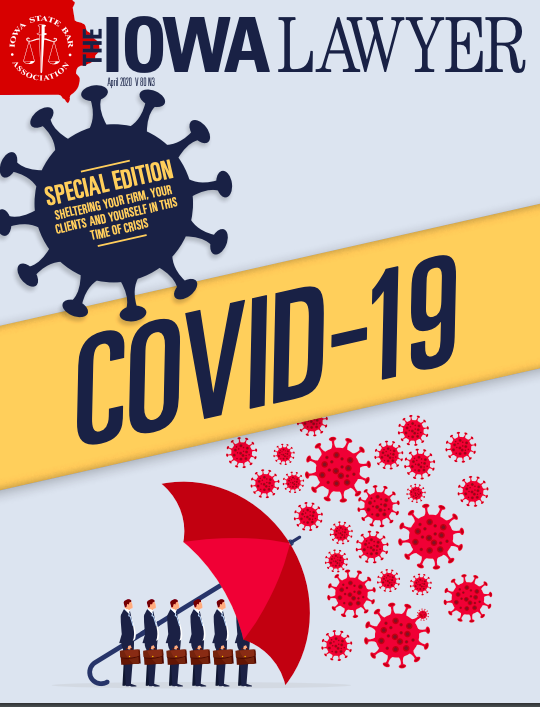
The Iowa State Bar Association recently published a special edition of The Iowa Lawyer, dedicated to legal situations and considerations related to the global pandemic of COVID-19.

Gordon Fischer Law Firm wrote two pieces for this volume. The first article provides tips for supporting nonprofits providing critical aid. The second piece covers best practices for estate planning during coronavirus and how getting even the basic documents in place can provide some peace of mind. The hope is that these pieces provide useful information for all Iowans, not just attorneys. Scroll to pages 15–18 on this PDF version of the publication to start reading!

Iowa Lawyer COVID-19 Cover April 2020

Also in the Iowa State Bar Association’s publication are some interesting stories on: managing anxiety and stress during this chaotic time; how to stay cybersecure while working from home; and what companies’ legal obligations are around the coronavirus, among many other worthwhile reads.

If you’re interested in reading GFLF’s previously published articles in past editions, click here to scan through the archives. Also, the articles got you thinking that it may be time to start on or revise your estate plan, check out GFLF’s free, no-obligation Estate Planning Questionnaire.

Picture of tablet offering self isolating guidance for COVID-19

Many of us are facing uncertainty and tough times as COVID-19 has forced much of daily life to look different for the time being. Many are working from home for the first time; students are engaged in distance learning; and some of us are taking care of loved ones and friends.

GFLF appreciates and respects the health and safety precautions we should all take to mitigate the spread of COVID-19. While I greatly enjoy meeting with all of my clients, for the immediate future all of my services can still be provided—in full and without any change in quality—through phone calls, emails, and video conferencing. I’m also still offering free consultations and would love to chat about your estate planning, charitable giving, or nonprofit needs.

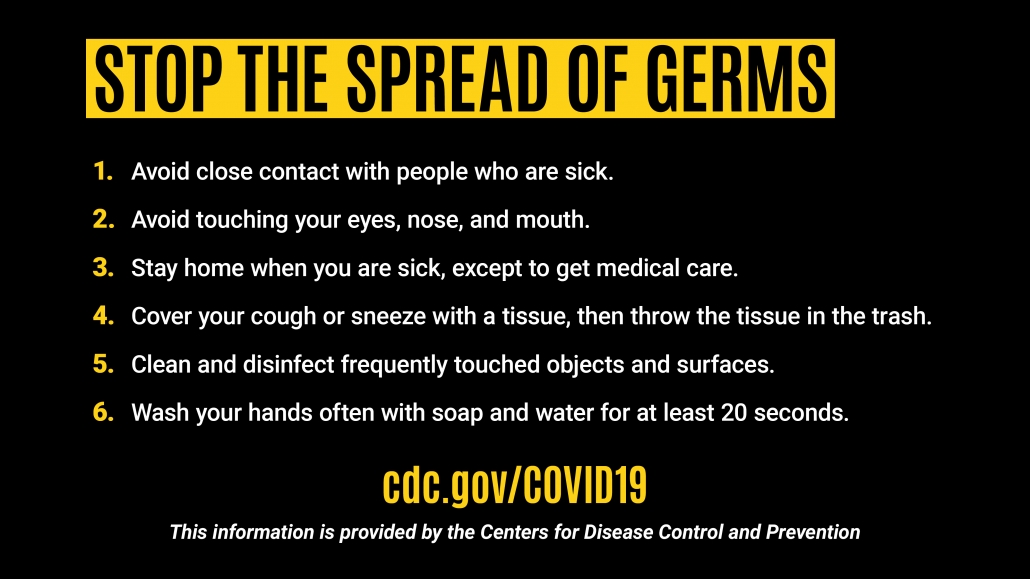
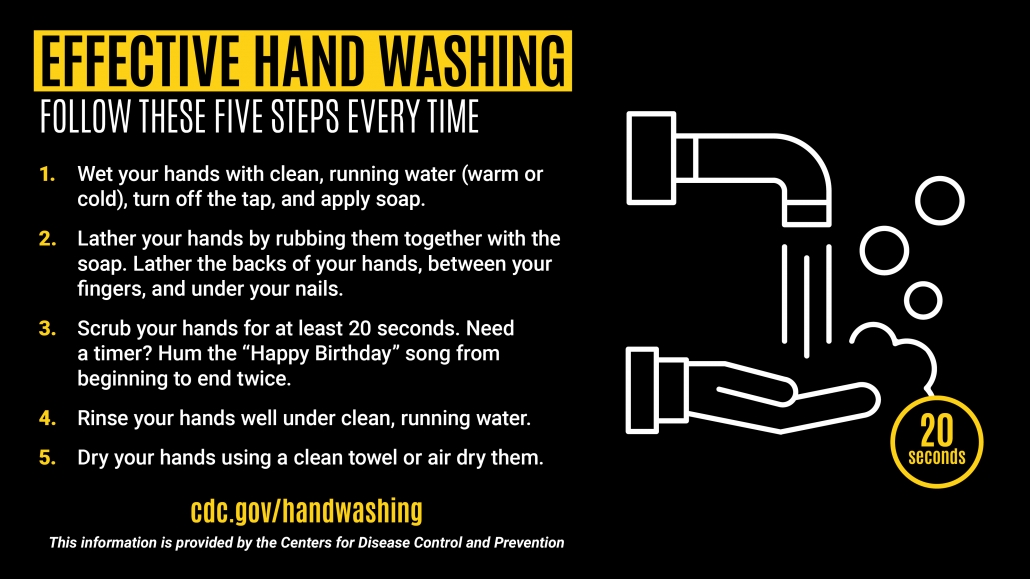
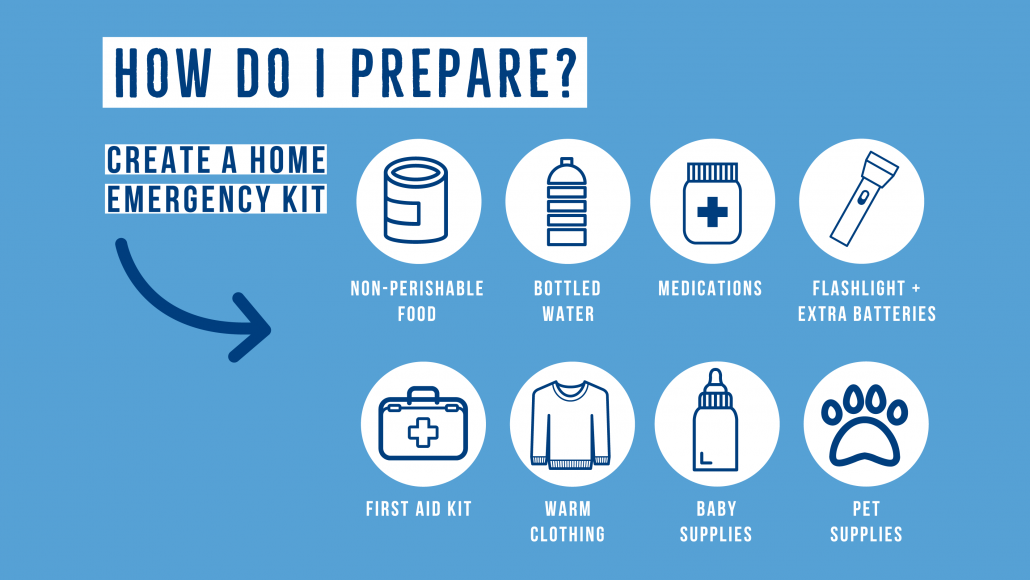
While I’m certainly not a health care professional, I want to help our heroes on the frontlines of this virus by sharing important information. Over the past couple of weeks, I’ve seen some informative graphics and have included some of my favorites below. If you have important Iowa-specific information, especially related to charitable giving or nonprofit organizations, please don’t hesitate to share with me on Facebook, Twitter, Instagram, or email.

Stop the Spread of Germs image

Hand Washing Image

how do I prepare for coronavirus and lists steps

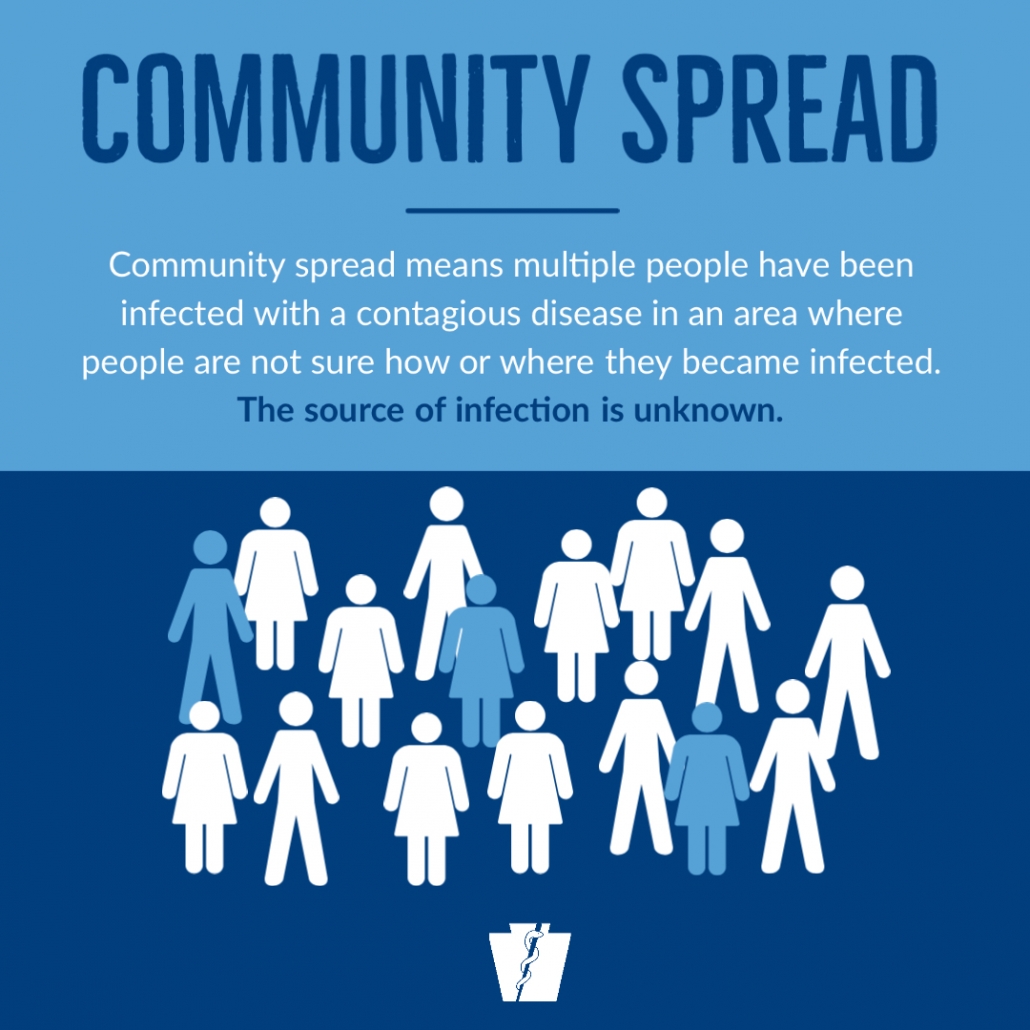
What community spread means

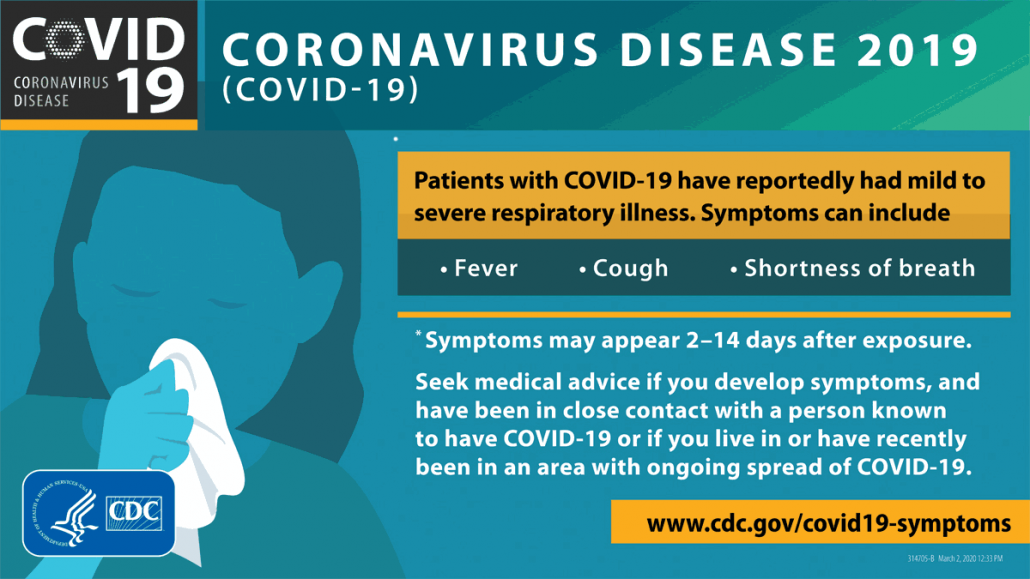
Coronavirus Disease 2019

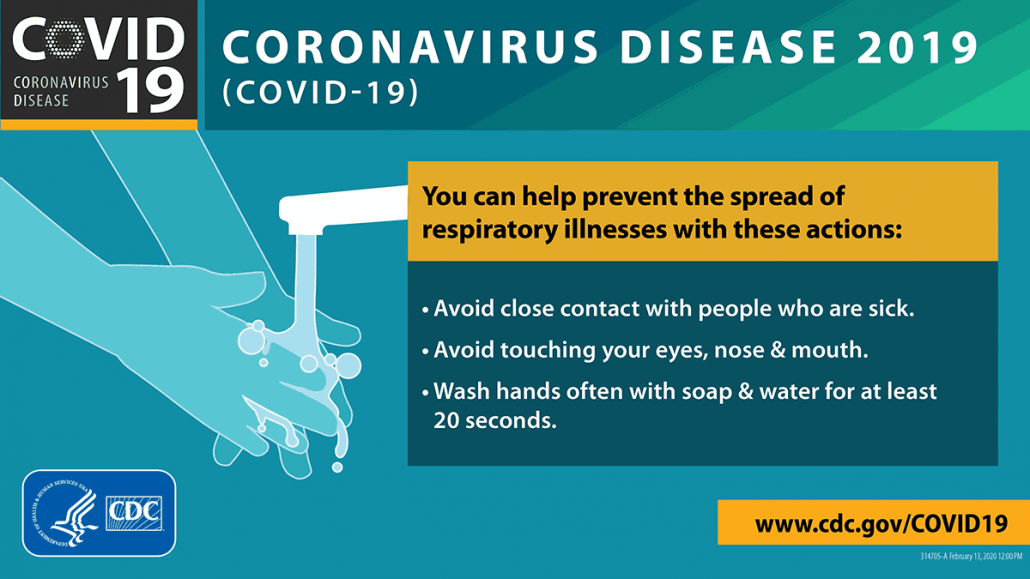
Coronavirus Disease Handwashing

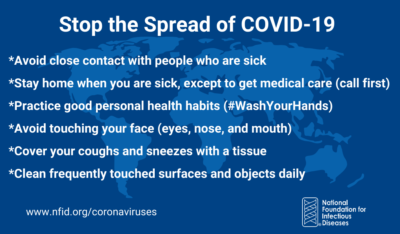
Stop the Spread of COVID-19

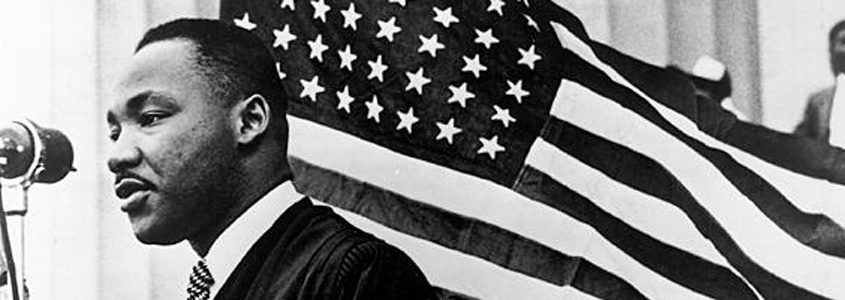
Marting Luther King Jr. and American Flag

Martin Luther King Jr. Day is tomorrow (January 20) I think it’s important to pay tribute to a man who truly championed ideals of equity, freedom, peace, and justice. Among his many accomplishments, Dr. King tirelessly pushed for nonviolent activism and peaceful resolution to human rights issues. He reportedly wrote five books and gave hundreds of speeches in a single year…more than most of us could produce in a lifetime. And, there’s no doubt that he was a key player and influencer in the passage of the U.S. Civil Rights Act of 1964. Dr. King was subsequently was awarded one of the highest honors in the world in 1964—the Nobel Peace Prize—for “his dynamic leadership of the Civil Rights movement and steadfast commitment to achieving racial justice through nonviolent action.” (He donated the prize money, $54,123, back to the civil rights movement.)

Dr. King and his lasting legacy can undoubtedly serve as an inspiration to us all. I see his dream of a better world—a better future for all—exemplified in action by the hardworking Iowa-based nonprofit organizations. I also see his lessons being practiced by the wonderful donors who support these organizations and advance their missions.

So, yes, it’s nice to have a day off of work, but make certain the day doesn’t pass you by without setting a plan in place to perform some form of service for others.

Dr. King tirelessly pursued the advancement of human rights for the greater good and we can honor him by practicing forms of charitable giving as a way to advance our communities. Be it through volunteering time to an organization that speaks to your heart (remember, certain costs associated with volunteer can be tax deductible), setting up a donor-advised fund, or simply writing a list of the nonprofits you would like to include as beneficiaries in your will, you too can set out on an honorable service-oriented path and inspire your friends, family, and colleagues to follow suit.

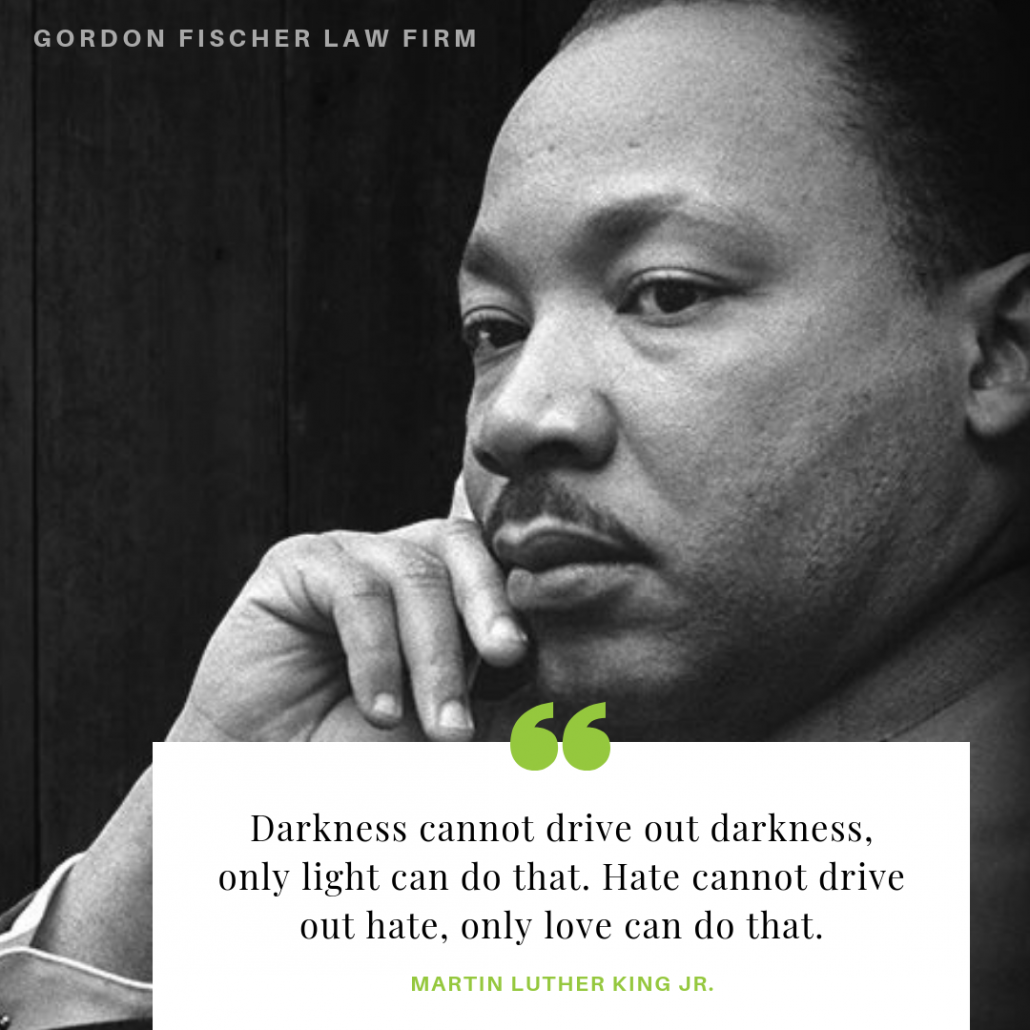
MLK Jr. Day Quote

Dr. King’s lessons resonate with our hearts and heads because we too have dreams of making our corners of the world a better place to learn, live, and grow through service. Maybe Dr. King’s commitment to “practice what you preach” mentality has inspired you this year to give charitably more and more often. Maybe you considered his question, “What’s your life’s blueprint?” and decided to form the charity you’ve wanted to establish for a long time. Either way, don’t hesitate to contact me for a free consultation. As Dr. King said: “The time is always right to do what is right.”

thanksgiving thankful

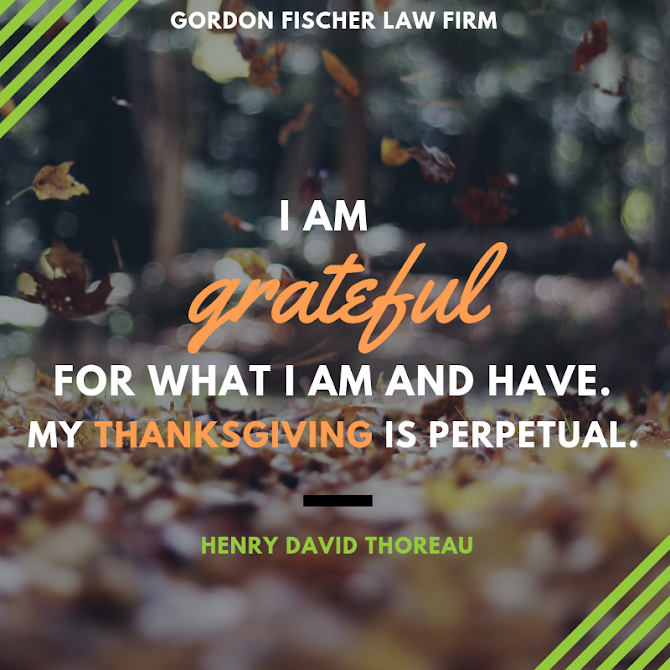
I would like to wish you a very happy Thanksgiving. I hope that you have the opportunity to spend quality time with your loved ones. I’ve taken a much needed moment this holiday to take a step back and think about all GFLF has to be thankful for. I owe so much to my clients, friends, and family who have helped make this year a successful one.

grateful quote

Here are just a few of the things GFLF has to be exceedingly grateful for:

But, really, this is a short list—the tip of the turkey, if you will—of what GFLF is perpetually thankful for.

Wishing you full bellies and hearts today,

Gordon Fischer

Flag in field with sun

“True heroism is remarkably sober, very undramatic. It is not the urge to surpass all others at whatever cost, but the urge to serve others at whatever cost.” -Arthur Ashe

On Veterans Day and every day, I want to say a heartfelt thanks for our veterans’ sacrifice and service. I work with many veterans on estate planning and in nonprofit-related work, and it’s always an honor. There are not enough “thank you’s” in the world to express my gratitude for what they have done for our country.

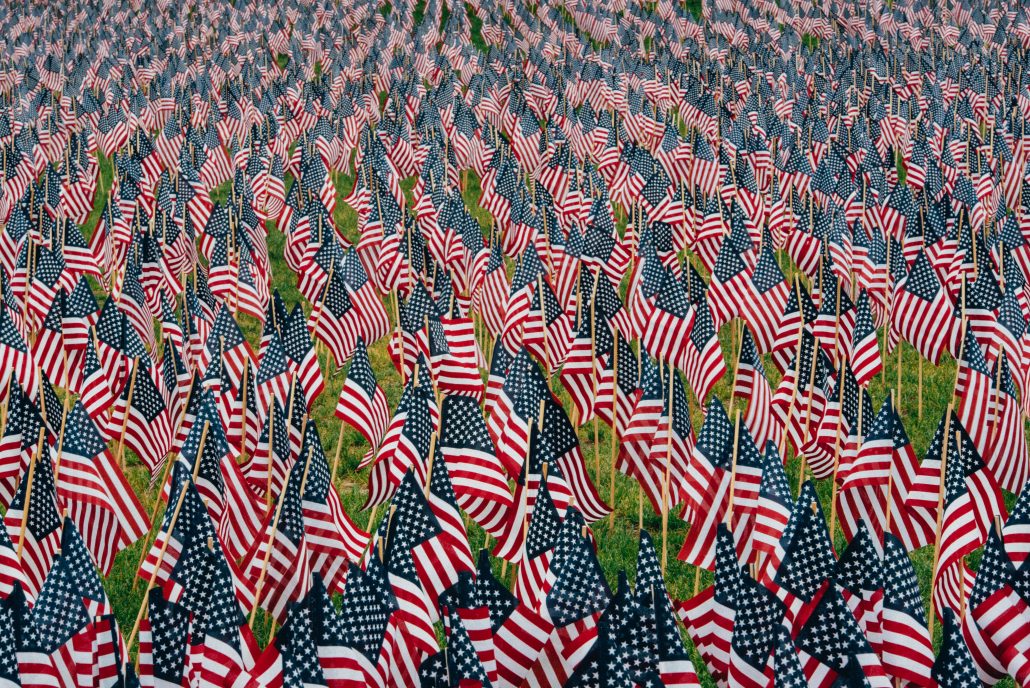
Veterans Day flags

As a veteran your story is important. Your legacy is important. To preserve that legacy of strength and service, you need an estate plan to ensure your property and assets are distributed to your loved ones and favorite charities in accordance with your wishes.

So, in an attempt to express my gratitude I would like to offer 25% off the cost of an estate plan package to all Iowan active duty or retired service members. The discount will be honored through 11/30/2019. Contact me via email or by phone (515-371-6077) to discuss your estate planning needs.

What does an Estate Plan Include?

There are six documents that should be part of most everyone’s estate plan.

  1. Estate planning questionnaire
  2. Will
  3. Power of attorney for health care
  4. Power of attorney for finances
  5. Disposition of personal property
  6. Disposition of final remains

You should keep these documents updated and current. (Here are a few common “big” events that necessitate estate plan revisions.) Also, don’t forget about assets with your beneficiary designations. For most Iowans, that’s good – six documents, keeping them current, and also remembering about those assets with beneficiary designations.

American flag on chair

Cost of an Estate Plan

Because I want every Iowan to have an up-to-date estate plan I’m very transparent with the cost of an estate plan that takes into full consideration YOUR situation. (This is why you need an experienced estate planner to draft your documents.) Speaking very generally, an estate plan from my Firm usually costs a single person about $790, and a family about $990. So, with this Veterans Day discount, that’s a saving of about $197.50 for singles to $247.50 for a family.

Estate Planning Process

I write about my process at length, but it’s just five steps! Seriously, it’s not that painful. My clients report back to me that they have such relief and peace of mind when it’s completed.

Contact

If you’ve been making excuses or have an extremely outdated estate plan now’s the time to check it off your list (and get a discount while doing so!).

How to get started? Contact me by the end of the month (11/30) via email (gordon@gordonfischerlawfirm.com) or phone (515-371-6077) and fill out my free Estate Plan Questionnaire.


DISCLAIMERS

The “Veterans Day discount” is only applicable for estate plans created by active or retired veterans (and their spouses). Availability of the discount ends after November 30, 2019 at which point the prospective client must have contacted Gordon Fischer Law Firm and indicated an intention to make an estate plan.
Veterans Day discount merely relates to pricing and in no way creates an attorney-client relationship, nor any other kind of professional relationship. The Veterans Day discount does not create a contract or agreement of any kind.
Gordon Fischer Law Firm, P.C. retains full and total discretion as to who it chooses to serve as clients and why. Gordon Fischer Law Firm, P.C. retains the right to refuse service to anyone it so chooses.
The Veterans Day discount may not apply to individuals or families with a high net worth of around/more than a million-plus dollars. (You still need an estate plan, very much so, but it necessarily needs to be more “complex” to adequately account for all assets.).
voting booth

We’re taking a momentary break from learning the ins and outs of estate planning, how to form a successful, compliant nonprofit, and how to practice tax-wise charitable giving for an important message brought to you by democracy…go vote! The 2019 General Election will be held November 5, 2019. This is the first time Iowa’s city and school elections are combined on the same day; in past years school elections were held in September. According to figures from the Iowa Secretary of State’s Office, there are a total of 2,780 different races across the state. Furthermore, 5,445 candidates are running for 4,920 different seats. Plus there are 149 public measures being voted on.

Voting seems simple, but there can rules surrounding the voting process that can make things confusing, or at least uncertain. To help out I’ve compiled a list of useful information. Share it with your friends, family, and colleagues and encourage them to cast their ballot!

Voter Ready

Do I have to register to vote?

Yes. Registering to vote is a legally required in Iowa. The requirements you have to meet to register are:

  1. Must be at least 17 years old, and be 18 years old by election day (or be 18 by the city/school election or general election vote in a primary election)
  2. Must be a U.S. Citizen
  3. Must be a resident of Iowa
  4. Cannot be a convicted felon (unless your voting rights have been restored)
  5. Cannot be judged mentally incompetent by a court of law
  6. Cannot claim the right to vote in any other place

What’s the pre-registration deadline to register to vote?

The pre-registration deadline to register to vote was October 25. (For future reference, you can pre-register to vote online, by mail, or at your county auditor’s office.

What if I didn’t pre-register?

If you miss the pre-registration October deadline don’t worry because you can register in person at your polling place on Election Day. To do this you go to your polling place and must provide proof of ID and current residence within the precinct. (The documentation can be either electronic or paper.)

Acceptable documents for proof of ID include:

  • Iowa non-driver ID card
  • Out-of-state driver’s license or non-driver ID card
  • U.S. passport
  • U.S. military ID
  • ID card issued by an employer
  • Student ID issued by Iowa high school or college
  • Tribal ID

Acceptable documents for proof of residence include:

  • Residential lease
  • Utility bill (including a cell phone bill)
  • Bank statement
  • Paycheck
  • Government check or other government document

What if I want to register on Election Day but don’t have the proper documentation? 

Even still, if you don’t have sufficient documentation on hand, you may still register if another registered voter, who lives in the same precinct, attests to your identity and residence via Election Day Registration documents. You and the attester will be required to sign an oath swearing the statements are true. (Note well that a false attestation for either party constitutes registration fraud and is considered a class “D” felony and is punishable by a fine of up to $7,500 and up to 5 years in prison.)

I’m unsure if I’m registered to vote in Iowa. How do I check?

Search your status here.

Speaking of polling place, where do I vote?

Find your polling place by entering your zip code here. (The polling place data on the Iowa Secretary of State page is for regularly scheduled Primary, General, School and City Elections. The data is provided by county auditors through the statewide voter registration database.)


Can I vote early or absentee?

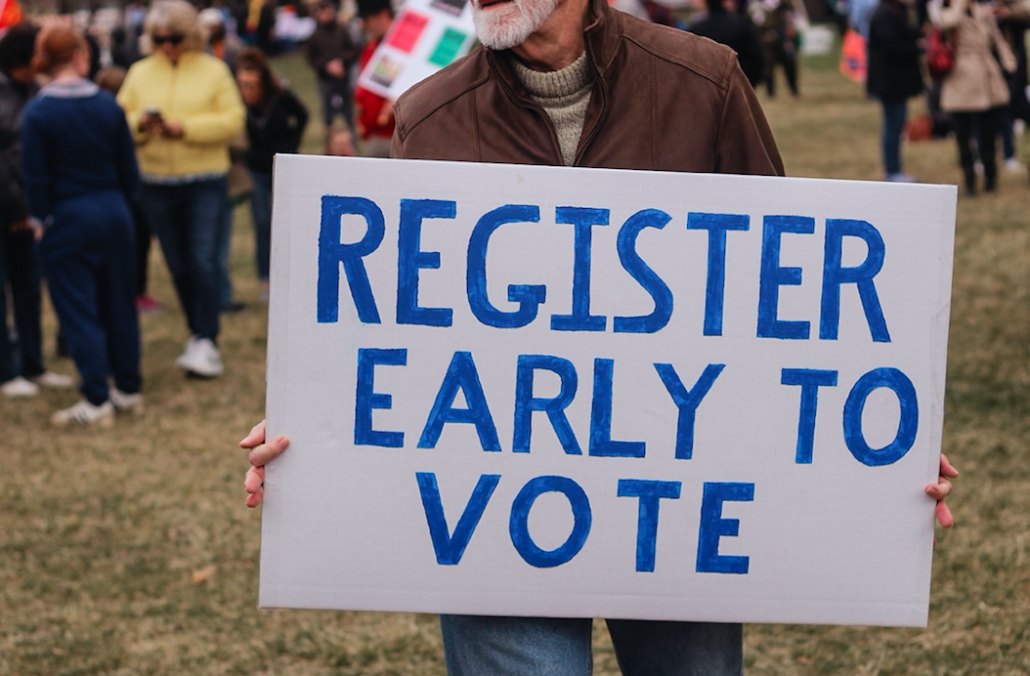
register early to vote

Definitely! There are three ways to vote by absentee ballot if you are registered to vote in Iowa.

  1. Absentee ballot by mail
  2. Absentee ballot in person at county auditor’s office
  3. Absentee ballot at a satellite voting location

Iowans living overseas can register to vote and request an absentee ballot in one step.

I just moved to Iowa. Can I vote?

If you have moved to Iowa from another state or moved to a different county in Iowa, pre-register to vote in your new county 10 days before general elections. (It’s 11 days before all other elections.) If you miss the pre-registration deadline, Election Day registration is available.

I’m a college student in Iowa from another state? Can I vote in Iowa?

As a college student, you may choose to register to vote at your home address or at your college address. You can’t register to vote at both. To pre-register to vote, complete a voter registration form and return it to your county auditor’s office.

What about voters with disabilities?

If you or a family member need special assistance to vote, you have the right to have an accessible voting location, assistance to vote and accessible voting equipment. Here’s a helpful brochure on what you need to know.

Can an Iowan still vote if they have a guardian or conservator?

Yes, persons with a guardian or conservator can still vote, unless a judge has specifically said in a court ruling that they may not vote.

Do I need an ID to vote?

You will be asked to show one of the following at your polling place by precinct election officials:

  • Iowa Driver’s License (not expired more than 90 days)
  • Iowa Non-Operator ID (not expired more than 90 days)
  • U.S. Passport (not expired)
  • U.S. Military ID or Veteran ID (not expired)
  • Iowa Voter Identification Card (must be signed)
  • Tribal ID Card/Document (must be signed, with photo, not expired)

The Iowa Voter Identification Card is provided to all voters that don’t have either an Iowa’s driver’s licenses or non-operator ID.  The Card is provided automatically by the county auditor. (For replacement Cards, contact your County Auditor.)

If you’re without any of these forms of ID you can hope someone you know will be there to attest to your identity and residence. Otherwise, you can prove your identity using Election Day Registration documents.


Questions? Any information you think other readers should know? Feel free to contact me

man reading on a tablet

The October edition of GoFisch is out! Give GoFisch a read to learn more about:

  • Halloween-related posts to help make estate planning less scary
  • Book club pick for November
  • A philanthropy-related video featuring Bill & Melinda Gates
  • Blog highlights
  • My new Halloween playlist on my Spotify
  • Nonprofit & charitable giving news

Like what you read? You’re invited to subscribe to the monthly newsletter; I never send out spammy communications. Know a nonprofit leader, philanthropist, or anyone who needs an estate plan? Feel free to pass the newsletter along!

happy halloween

The December holidays don’t need to be the only time of the year that you give charitably! Halloween is the perfect excuse to do something sweet in the spirit of the spooky. Let’s be honest, most years you have way too much leftover candy. You never want to leave any trick-or-treaters empty bucketed. Combine that with the haul the kiddos heave home and it’s a recipe for a cavity (and some extra pounds). Satisfy your sweet tooth and then do something good with your candy!

Halloween pumpkin

This Halloween, I challenge you to make a simple, but significant donation of un-opened, wrapped candy in lieu of an unnecessary sugar rush. Here are a few ideas to get you started:

Treats for Troops

Treats for Troops, run by 501(c)(3) Soldiers’ Angels, collaborates with businesses (like dentist offices!) to be candy collection centers. The treats are then collected and distributed to soldiers stationed overseas, wounded service personnel, and veterans. By searching for a drop-off site near me, I found two within a reasonable distance.

Ronald McDonald House

The Ronald McDonald House does amazing work assisting families of sick children by providing a comfortable, affordable place to stay during treatment as well as good food (anything is better than hospital food!). There’s a local Ronald McDonald House here in Iowa City; contact them about dropping off your Halloween candy to make some kiddos (who may not have been able to trick-or-treat) very happy.

Operation Gratitude

Similar to Treats for Troops, Operation Gratitude compiles and sends care packages to first responders in the U.S. and service personnel stationed overseas. The organization’s mission is simple, but significant: to put a smile on soldiers’ faces. Along with donations of leftover candy, you can send encouraging letters, postcards, and pictures. Drop-off locations can be located on their map.

Pay attention to their do’s and don’ts, including the instruction to “fill out and submit an online Donation Form with the total pounds of candy and any additional donated items. You will receive an email confirmation with a printable barcode to include in your package, along with shipping instructions.” The organization needs your candy shipped by 11/9!

buckets with candy

What other ideas do you have for donating leftover, extra candy? Let me know on Facebook, Instagram, or Twitter!