We dove into the definition of the term “trust,” but that’s just the tip of the iceberg when it comes to learning about the important agreement that’s often used for purposes including estate tax liability reduction, estate property protection, and probate avoidance. There are four standard ways of classifying trusts.
Trust Classifications
Trusts may be classified by their purpose, duration, creation method, or by the nature of the trust property. One common way to describe trusts is by their relationship to the life of their creator. Those created while the grantor is alive are referred to as inter vivos trusts or living trusts. Trusts created after the grantor has died are called testamentary trusts. Another helpful classification of trusts is comparing those which are revocable to trusts which are irrevocable.
Inter Vivos Trust
An inter vivos trust, also known as a living trust, may be either revocable or irrevocable. In a revocable trust, the grantor can retain control of the property, if the grantor so wishes, and the terms of the trust may be changed or even canceled. An irrevocable living trust, on the other hand, may not be changed or terminated after it is executed.
A testamentary trust is most often a component of a will. The testamentary trust is created when the trustor passes away. The designated trustee then steps in and distributes or manages the assets of the trust according to the deceased’s wishes.
A revocable trust allows assets to pass outside of probate, yet allows you to retain control of the assets during your (the grantor’s) lifetime. It is flexible in that it can be dissolved at any time, should your circumstances or intentions change.
A revocable trust typically becomes irrevocable upon the death of the grantor. You can name yourself trustee, or co-trustee, and retain ownership and control over the trust, its terms, and assets during your lifetime. You may also make provisions for a successor trustee to manage them in the event of your death or incapacity.
Although a revocable trust allows you to avoid probate, it’s subject to estate taxes. It also means that during your lifetime, it is treated like any other asset you own.
Irrevocable Trust
An irrevocable trust typically transfers your assets out of your (the grantor’s) estate and potentially out of the reach of estate taxes and probate, but cannot be altered by the grantor after it has been executed. Therefore, once you establish the trust, you will lose control over the assets and you cannot change any terms or decide to dissolve the trust. An irrevocable trust is preferred over a revocable trust if your primary goal is to reduce the amount subject to estate taxes by effectively removing the trust assets from your estate. Also, since the assets have been transferred to the trust, you are relieved of tax liability on the income generated by the trust assets (although distributions to others may have income tax consequences). Trust assets in an irrevocable trust may also be protected in the event of a legal judgment against you
You probably still have some questions on trusts…which is why I’m here! Don’t hesitate to contact me. I offer a free one-hour consultation at which point we can discuss your personal situation, see if a trust is right for you, and set up the steps to take for success.
https://www.gordonfischerlawfirm.com/wp-content/uploads/2017/06/number-4-picture.jpg407612Gordon Fischerhttps://www.gordonfischerlawfirm.com/wp-content/uploads/2017/05/GFLF-logo-300x141.pngGordon Fischer2019-02-19 08:10:082020-05-18 11:28:48Four Major Ways to Classify Trusts
Hopefully, by now you have had a chance to read last month’s GoFisch Book Club pick, “Made to Stick: Why Some Ideas Survive and Others Die.” While I could complain about how the weather right now in Iowa is in a perpetual state of snow-ice-snow-wind-freezing rain, it’s actually a great excuse to curl up with cocoa and a great book. The title for this month is not a new book, but it is an enticing, mystery involving, what else, estate planning!
Published in 2013, John Grisham’s Sycamore Row leads readers on a trip to the south in 1980’s Mississippi where a wealthy white man, Seth Hubbard, commits suicide and leaves his entire estate to his black housekeeper, Lettie Lang, instead of his two adult children, Herschel and Ramona. (I bring up the race of the characters because racism and prejudice are important themes in the novel’s setting and plot conflicts.) Sycamore Row is a sequel for fan-favorite character and fictional attorney, Jake Brigance, who was introduced to the world in Grisham’s most famous book, A Time to Kill.
Brigance is instructed by the decedent to defend his will against the inevitable controversy and litigation he anticipates will ensue. Over the course of the thriller, another will is unearthed which disposes the estate to Hubbard’s children. There are also serious questions about Hubbard’s purported testamentary capacity, as well as undue influence on the legal documents in question.
What are your thoughts on Sycamore Row? I would love to hear them! Also, if the book inspires you to make certain you have a valid estate plan in place so that you can disperse your estate in accordance with your wishes, don’t hesitate to contact me! You can also get started on your estate plan with my free, no-obligation Estate Plan Questionnaire.
https://www.gordonfischerlawfirm.com/wp-content/uploads/2019/02/Screen-Shot-2019-02-17-at-4.12.57-PM.png5981052Gordon Fischerhttps://www.gordonfischerlawfirm.com/wp-content/uploads/2017/05/GFLF-logo-300x141.pngGordon Fischer2019-02-16 12:33:492020-05-18 11:28:49Cozy Up this GoFisch Book Club Pick: Sycamore Row
I was scrolling through Netflix the other night and finally landed on The Aviator, which I haven’t seen in a while. The 2004 Scorsese film starring Leonardo DiCaprio tells the story of the eccentric aviation magnate and movie producer, Howard Hughes, who tragically battled OCD, paranoia, and chronic pain (from a near-death plane crash) and spent his later life as a hermit. That led me down a rabbit hole of internet research into the real Howard Hughes. As an estate planner, I naturally wondered what happened to his estate when he passed away in 1976. (Perhaps fittingly the aviator passed away in an airplane.)
Even if You’re Not a Billionaire, You Need an Estate Plan
Unfortunately, the tale of the Hughes estate is a cautionary one of what NOT to do.
Hughes—who was reputed to be one of the wealthiest men in the world—died intestate, meaning he died without a valid will. That can cause chaos, confusion, and cost ample time and money for regular folks. But, when your estate is worth billions like Hughes’ was, it causes a mass tangle of court proceedings. In the case of the Hughes estate, debate and disputes lasted a total of 34 years.
In the aftermath of his death, several documents were brought forth alleging to be the magnate’s will. All were deemed to be forgeries. A Nevada court determined Hughes died intestate, meaning the law determines how assets are distributed to heirs-at-law. However, Hughes died divorced (allegedly) and without any close relatives; he left no clear heir(s). This debacle of no will meant that many people came out of the woodwork claiming to be relatives.
So, after years of attorneys, courts, and dubious claims, what actually transpired?
Eventually, $2.5 billion was split between 22 of Hughes legal cousins in 1983. (Undoubtedly he didn’t know some or even the majority of these people. It’s also been said he didn’t want his money to go to his distant relatives, but without an estate plan, his wishes were steamrolled by probate law.) In an interesting twist, a woman named Terry Moore came forth claiming she married Hughes on a boat in international in 1949 and that they were never divorced. She didn’t produce any proof of the marriage (like a marriage certificate), but the estate paid her a $400,000.
Undoubtedly, Hughes left his mark on 20th century American history. However, his legacy could have been cemented in the way he wanted (probably giving the bulk of his estate to the Howard Hughes Medical Institute and nothing to long lost cousins) if he would have had a proper estate plan created completed with valuable strategic tools like different trusts and charitable giving vehicles. While most of us will never have an estate valued even close to the likes of Hughes, we can be smart with what we do have and make certain what we choose is dispersed to whom we choose, when we choose. There’s no need for your assets to be tied up in red tape or be dispersed in a way that’s not fitting with your wishes.
Contact me with your estate planning questions, or get started with my free, no-obligation Estate Plan Questionnaire, which will help you organize important information needed for the plan in one place.
https://www.gordonfischerlawfirm.com/wp-content/uploads/2019/02/Screen-Shot-2019-02-11-at-9.55.29-PM.png627904Gordon Fischerhttps://www.gordonfischerlawfirm.com/wp-content/uploads/2017/05/GFLF-logo-300x141.pngGordon Fischer2019-02-15 22:03:592020-05-18 11:28:49The Howard Hughes Estate: A Cautionary Tale


Four Major Ways to Classify Trusts
Estates & Estate Planning, TrustsWe dove into the definition of the term “trust,” but that’s just the tip of the iceberg when it comes to learning about the important agreement that’s often used for purposes including estate tax liability reduction, estate property protection, and probate avoidance. There are four standard ways of classifying trusts.
Trust Classifications
Trusts may be classified by their purpose, duration, creation method, or by the nature of the trust property. One common way to describe trusts is by their relationship to the life of their creator. Those created while the grantor is alive are referred to as inter vivos trusts or living trusts. Trusts created after the grantor has died are called testamentary trusts. Another helpful classification of trusts is comparing those which are revocable to trusts which are irrevocable.
Inter Vivos Trust
An inter vivos trust, also known as a living trust, may be either revocable or irrevocable. In a revocable trust, the grantor can retain control of the property, if the grantor so wishes, and the terms of the trust may be changed or even canceled. An irrevocable living trust, on the other hand, may not be changed or terminated after it is executed.
Testamentary Trust
A testamentary trust is most often a component of a will. The testamentary trust is created when the trustor passes away. The designated trustee then steps in and distributes or manages the assets of the trust according to the deceased’s wishes.
Revocable Trust
A revocable trust allows assets to pass outside of probate, yet allows you to retain control of the assets during your (the grantor’s) lifetime. It is flexible in that it can be dissolved at any time, should your circumstances or intentions change.
A revocable trust typically becomes irrevocable upon the death of the grantor. You can name yourself trustee, or co-trustee, and retain ownership and control over the trust, its terms, and assets during your lifetime. You may also make provisions for a successor trustee to manage them in the event of your death or incapacity.
Although a revocable trust allows you to avoid probate, it’s subject to estate taxes. It also means that during your lifetime, it is treated like any other asset you own.
Irrevocable Trust
An irrevocable trust typically transfers your assets out of your (the grantor’s) estate and potentially out of the reach of estate taxes and probate, but cannot be altered by the grantor after it has been executed. Therefore, once you establish the trust, you will lose control over the assets and you cannot change any terms or decide to dissolve the trust. An irrevocable trust is preferred over a revocable trust if your primary goal is to reduce the amount subject to estate taxes by effectively removing the trust assets from your estate. Also, since the assets have been transferred to the trust, you are relieved of tax liability on the income generated by the trust assets (although distributions to others may have income tax consequences). Trust assets in an irrevocable trust may also be protected in the event of a legal judgment against you
Let’s Get Started
You probably still have some questions on trusts…which is why I’m here! Don’t hesitate to contact me. I offer a free one-hour consultation at which point we can discuss your personal situation, see if a trust is right for you, and set up the steps to take for success.
Cozy Up this GoFisch Book Club Pick: Sycamore Row
Book Club, Estates & Estate PlanningHopefully, by now you have had a chance to read last month’s GoFisch Book Club pick, “Made to Stick: Why Some Ideas Survive and Others Die.” While I could complain about how the weather right now in Iowa is in a perpetual state of snow-ice-snow-wind-freezing rain, it’s actually a great excuse to curl up with cocoa and a great book. The title for this month is not a new book, but it is an enticing, mystery involving, what else, estate planning!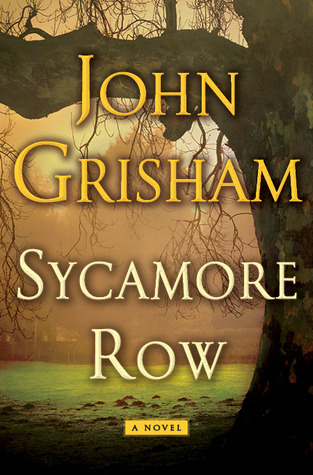
Published in 2013, John Grisham’s Sycamore Row leads readers on a trip to the south in 1980’s Mississippi where a wealthy white man, Seth Hubbard, commits suicide and leaves his entire estate to his black housekeeper, Lettie Lang, instead of his two adult children, Herschel and Ramona. (I bring up the race of the characters because racism and prejudice are important themes in the novel’s setting and plot conflicts.) Sycamore Row is a sequel for fan-favorite character and fictional attorney, Jake Brigance, who was introduced to the world in Grisham’s most famous book, A Time to Kill.
Brigance is instructed by the decedent to defend his will against the inevitable controversy and litigation he anticipates will ensue. Over the course of the thriller, another will is unearthed which disposes the estate to Hubbard’s children. There are also serious questions about Hubbard’s purported testamentary capacity, as well as undue influence on the legal documents in question.
Grisham’s career as an attorney has clearly influenced his writing, and this novel offers suspense and intrigue around the topic of estate planning, while also reinforcing the importance of making a valid estate plan, keeping it updated, and discussing your decisions with your family.
What are your thoughts on Sycamore Row? I would love to hear them! Also, if the book inspires you to make certain you have a valid estate plan in place so that you can disperse your estate in accordance with your wishes, don’t hesitate to contact me! You can also get started on your estate plan with my free, no-obligation Estate Plan Questionnaire.
The Howard Hughes Estate: A Cautionary Tale
Estates & Estate Planning, Wills, Trusts & EstatesI was scrolling through Netflix the other night and finally landed on The Aviator, which I haven’t seen in a while. The 2004 Scorsese film starring Leonardo DiCaprio tells the story of the eccentric aviation magnate and movie producer, Howard Hughes, who tragically battled OCD, paranoia, and chronic pain (from a near-death plane crash) and spent his later life as a hermit. That led me down a rabbit hole of internet research into the real Howard Hughes. As an estate planner, I naturally wondered what happened to his estate when he passed away in 1976. (Perhaps fittingly the aviator passed away in an airplane.)
Even if You’re Not a Billionaire, You Need an Estate Plan
Unfortunately, the tale of the Hughes estate is a cautionary one of what NOT to do.
Hughes—who was reputed to be one of the wealthiest men in the world—died intestate, meaning he died without a valid will. That can cause chaos, confusion, and cost ample time and money for regular folks. But, when your estate is worth billions like Hughes’ was, it causes a mass tangle of court proceedings. In the case of the Hughes estate, debate and disputes lasted a total of 34 years.
In the aftermath of his death, several documents were brought forth alleging to be the magnate’s will. All were deemed to be forgeries. A Nevada court determined Hughes died intestate, meaning the law determines how assets are distributed to heirs-at-law. However, Hughes died divorced (allegedly) and without any close relatives; he left no clear heir(s). This debacle of no will meant that many people came out of the woodwork claiming to be relatives.
A Messy Web of Forgeries, Fraud, & Litigation
So, after years of attorneys, courts, and dubious claims, what actually transpired?
Eventually, $2.5 billion was split between 22 of Hughes legal cousins in 1983. (Undoubtedly he didn’t know some or even the majority of these people. It’s also been said he didn’t want his money to go to his distant relatives, but without an estate plan, his wishes were steamrolled by probate law.) In an interesting twist, a woman named Terry Moore came forth claiming she married Hughes on a boat in international in 1949 and that they were never divorced. She didn’t produce any proof of the marriage (like a marriage certificate), but the estate paid her a $400,000.
The Supreme Court even had to step in. They ruled in the messy dispersion of assets that the Howard Hughes Medical Institute owned Hughes Aircraft, which it then sold off in 1985 to General Motors for more than $5 billion. The Court also rejected lawsuits brought by Texas and California, claiming they were owed inheritance taxes, but the suits were eventually put to rest with settlements of $50 million and $150 million respectively in property and/or cash.
In 2010, more than three decades after Hughes passed, the last slice of Hughes pie (Summerlin residential development community near Las Vegas) was liquidated.
Leave a Valuable Legacy
Undoubtedly, Hughes left his mark on 20th century American history. However, his legacy could have been cemented in the way he wanted (probably giving the bulk of his estate to the Howard Hughes Medical Institute and nothing to long lost cousins) if he would have had a proper estate plan created completed with valuable strategic tools like different trusts and charitable giving vehicles. While most of us will never have an estate valued even close to the likes of Hughes, we can be smart with what we do have and make certain what we choose is dispersed to whom we choose, when we choose. There’s no need for your assets to be tied up in red tape or be dispersed in a way that’s not fitting with your wishes.
Contact me with your estate planning questions, or get started with my free, no-obligation Estate Plan Questionnaire, which will help you organize important information needed for the plan in one place.