
Posts

man reading newspaper

If spelling tests weren’t always your strong suit in school, fear not! Today’s legal word of the day is an easy one that’s having a momentary editorial heyday.

Ripped From the Headlines

As you probably heard, The New York Times took the highly unusual step of publishing an unsigned, anonymous op-ed entitled, “I am Part of the Resistance Inside the Trump Administration.” The person was identified only as follows:

“…. a senior official in the Trump administration whose identity is known to us and whose job would be jeopardized by its disclosure. We believe publishing this essay anonymously is the only way to deliver an important perspective to our readers.”

man with newspaper near train

Whodunnit?

The article led to a nationwide guessing game. Who is the senior official in the Trump administration who penned this “explosive” piece? Suspicion fell onto, of all people, Vice President Mike Pence. This is because the op-ed writer uses the word “lodestar,” and Pence has used this obscure word multiple times. (Pence vehemently denied he was the author, by the way.)

I don’t know who wrote the op-ed, and we may never know, but the real winner out of this news cycle is the word you never knew you needed in your vocabulary—lodestar!

So, What DOES Lodestar Mean?

Lodestar means “a star that leads or guides,” and is especially used in relation to the North Star.

timelapse of stars

Now, Let’s Talk About a Similar Kind of “Star”

At this point you’re like, “Gordon, this is a cool word I can def use in playing Scrabble, but what does it have to do with the law?”

Well, “lodestar” is a synonym and practically interchangeable with the word “polestar,” which is defined as a “directing principle; a guide.”

A court will use the term polestar like so: In this case, our polestar must be this principle . . .

Basically the court will use such-and-such as its guiding principle.

direction sign on a mountain

For example, in the law of wills, the Iowa Supreme Court stated In the Estate of Twedt that “the testator’s [maker of the will’s] intent is the polestar and if expressed must prevail.” You’ll see the same in the law of trusts, the intent of the settlor of a trust must be the polestar.

The word is also used in the law of charitable giving. The intent of the donor is the polestar which courts must follow if there are any issues. For example, suppose a donor posthumously donates $100,000 to a nonprofit, but the nonprofit no longer exists. What was the donor’s intent? Is it stated anywhere what the donor wanted to happen to the charitable funds if the nonprofit was no more? If not written, did the donor discuss the matter with anyone? To resolve any dispute involving a charitable gift, the guiding principle–the polestar–must be the donor’s intent.

Practical application of the Word Polestar

A major reason to have an estate plan is that YOU get to control your own future, rather than being controlled by outside forces or outside events. Through proper estate planning, you can be in total control of the answers to the following questions:

And if there are any questions or issues regarding your estate plan, lawyers and judges looking at your estate plan will make decisions based on YOUR intent. Your intent will be the polestar!

Don’t delay any longer – thank your lucky (North) stars you still have time to make a proper estate plan. I’d be happy to talk with you about your estate plan any time, or you can get started on organizing your important info in my free Estate Plan Questionnaire. I can be reached via email (gordon@gordonfischerlawfirm.com) or by cell (515-371-6077). I’d truly love to hear from you.


Man sitting at conference table with phone

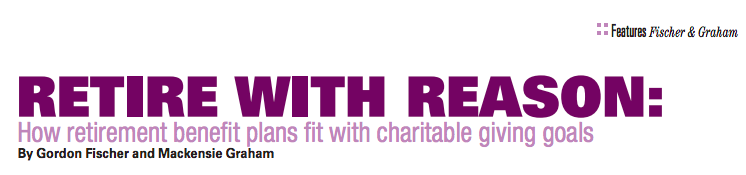
The September edition of “The Iowa Lawyer” is now out! Published by the Iowa State Bar Association, this month focused entirely on retirement-related topics. According to the ISBA, there are approximately 2,300 ISBA members who are 60 and older. And, in Iowa in general, people age 65 or older comprise 16.7% of the population. Retiring is a whole different stage in life that can come with newfound challenges as well as benefits. While geared toward Iowa attorneys, many of the insights are applicable in other industries. For instance, succession planning is important for all business owners! Similarly, retirement is a time when charitable giving often gets a boost.

Iowa Lawyer September 2018

GFLF’s piece focuses on how you can use retirement benefit plans to benefit the charities and causes you care about in a strategic, tax-wise way. This is super important for all Iowans to know (not just attorneys!). In the article we focus in on three important tax concepts:

  1. Inheritance as income
  2. Income in respect of a decedent
  3. Step-up in basis (also called, stepped up basis)

You  can read the full article by clicking here and scrolling to page 23.

Retire with a Reason

Any questions after reading? Feel to explore more on the topic in our other blog posts on the subject or contact GFLF at any time to discuss by email, at gordon@gordonfischerlawfirm.com, or by phone at 515-371-6077.

Laptop computer with blue desktop

I love getting to collaborate with wonderful professional advisors (like financial advisors and insurance agents, among many others) to promote and maximize charitable giving in Iowa. Together we get to help their clients best incorporate strategic charitable giving in to their financial and estate planning goals and plans.

People come to philanthropy from many different places and for many different reasons. Beyond the obvious tax benefits of donating to a charitable organization, there’s always that admirable intention of wanting to make a difference, of aspiring to help the organizations and causes they care about progress.

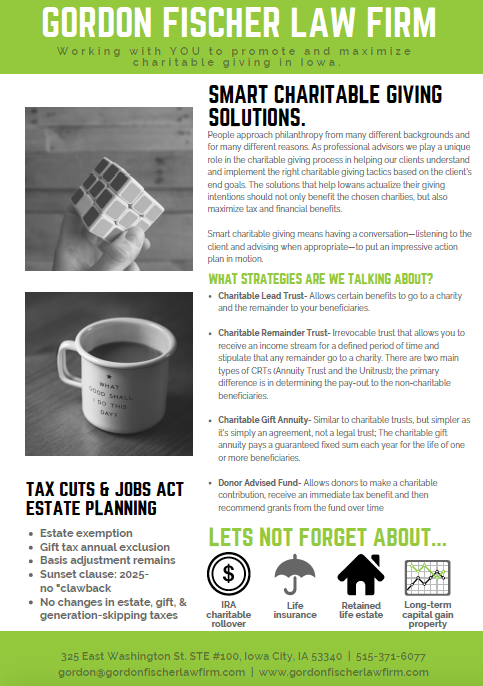
As a starting point for discussing smart charitable giving solutions, I’ve created this handy one-pager. It gives an overview of strategies like the popular donor advised fund and different types of charitable trusts, and reminds of other options like an IRA charitable rollover and retained life estate. The pdf also hits on aspects of the Tax Cuts and Jobs Act that prospective donors and professional advisors should be aware of.

Smart charitable giving guide

Click here to view the free guide to smart charitable giving solutions and then let’s continue the conversation. Additionally, you can learn more about how Gordon Fischer Law Firm works with the professional advisors here. Together I’m certain we can craft the best, legal giving solutions that align with your clients’ giving goals.

Earlier this month we launched fireworks, grilled burgers, and spent time with loved ones while celebrating the Fourth of July. America’s Independence Day stands as a surrogate of sorts for the ideals that our great nation was built on. The Fourth of July has always been a special holiday for me, and my family, as my parents immigrated to America from Germany just before the Iron Curtain came down.

Along with life, liberty, and the pursuit of happiness, I like to highlight the freedom we have to give charitably to the causes and organizations that are important to us. The most economical, tax-wise philanthropy can involve unique strategies (like “bunching” multiple years’ worth of giving into one year) and gifting non-cash assets (such as appreciated stocks). You can also consider writing charitable bequests to the tax-exempt organizations you support into your estate plan. The bottom line? There are so many different, effective charitable giving tactics you can employ to support your community. In turn, it makes America an even better place to live!

I’ve blogged about many, many tax-wise charitable tools and techniques, but here are just four (in honor of July 4th) you ought to consider (in no particular order):

Charitable Gift Annuities (CGAs)

A charitable gift annuity is a contract. More specifically, it’s a contract between a donor and a charity, whereby the donor transfers cash or property to the charity in exchange for a partial tax deduction and a lifetime stream of annual income from the charity.

Charitable Remainder Trusts (CRTs)

A charitable remainder trust is a very useful type of trust. It’s an an irrevocable trust that generates a potential income stream for you, as the donor to the CRT, or other beneficiaries, with the remainder of the donated assets going to your favorite charity or charities. I break down CRTs here.

Charitable Lead Trusts (CLTs)

A charitable lead trust is perhaps most easily defined as the inverse to the charitable remainder trust (CRT). A charitable lead trust is an irrevocable trust designed to provide financial support to one or more charities for a period of time, with the remaining assets eventually going to family members or other beneficiaries.

Simple Bequests

We may forget with all the fancy tools and techniques that are available, but let’s not forget that a simple bequest, to the charity or charities of your choice, can be incredibly powerful! In fact, even a game changer for many nonprofits. Consider adding your favorite charity to your will. And if you don’t have a will yet, that’s the first step you should take. You can download my EPQ for free to get started on building the estate plan that will help provide for your family AND favorite causes.

green plant growing

Whatever your giving goals and financial situation, I can help you structure your philanthropic gifts, so they provide maximum tax-wise benefits, while also ensuring your charitable intent is both respected and followed. Get smart about giving and contact me at Gordon@gordonfischerlawfirm.com or 515-371-6077. I offer everyone a free one-hour consultation.

What do you think of when you think of July? I think about family picnics, vacations, fireworks, the MLB All Star Game, the beach, hometown festivals, and a cold bottle of beer on a hot day.

But mostly I think of Independence Day!

The Fourth of July means a great deal to me as the son of immigrants, with both a mother and father who risked all by leaving home forever, crossing an ocean, and coming to a country they didn’t even begin to yet know.

My parents were from in East Germany. Neither knew English. Neither had been outside of Germany. Indeed, neither had travelled at all very far from their homes—my dad’s small farming town and my mom’s city life in nearby Dresden.

In 1960, the wall divided East and West Germany, but was still just a bit porous. It wasn’t yet the Iron Curtain of the forthcoming years, where leaving was all but impossible.

My parents saw what was coming, or sensed it at least, and decided escaping was worth the enormous gamble. The dream was to make it to America, and become Americans.

With a day-long work visa, my dad went to West Germany. From there, you could pretty much do what you want – West Germany was a democracy with complete freedom of travel.

A Cabinet Maker’s Journey

My dad had the following possessions for a trip halfway around the world: a small suitcase of clothes and personal items; a rolled-up master’s degree in cabinet making; and $500 (in the form of five $100-dollar bills) squirreled away. That was all.

My dad arrived at Ellis Island with the good word from family acquaintances (from Czechoslovakia), who had emigrated to Chicago, that there was plenty of available work in the Windy City.

So, he took a Greyhound Bus from New York to Chicago. When he arrived at Chicago, no doubt feeling somewhat disoriented and overwhelmed, he almost had his suitcase (his one possession!) stolen by the bus driver.

(The bus driver had given him a claim check ticket, but now claimed the claim check ticket didn’t match, and that my dad couldn’t have his suitcase until this could all be figured out by the home office. My dad didn’t know about any home office, but he did know he couldn’t possibly even let the suitcase out his sight. The driver tried some more flim flam…my dad insisted on his suitcase…there was a standoff, and eventually the driver realized he’s needed to find a more gullible tourist, and relented.)

He lived in downtown Chicago with his family friends, worked two jobs, and wrote my mom often. It was understood by all that the mail was being opened and read, both by the East Germans and the Americans.

Eventually, my dad decided he was settled enough to have my mom come over. My mom followed the same path—day-long work pass to West Germany, boat trip to New York, bus to Chicago.

American Dream

american flag and hat

They worked four jobs between them, trying to save money. The dream, of course, was to save enough money to live in their very own apartment, buy a house, and ultimately raise a family.

They learned English by watching TV and trying to read the newspaper during the small windows of time when they weren’t working. But the folks they were in daily contact with, both at work and at home, were Czech.

Consequently, they ended up learning some pretty good Czech first! When they realized Czech as a second language was helpful, but not nearly as helpful as learning English was, they began speaking only in English. They would force themselves in all social situations to use English. They even opted for more TV, and forced themselves to go out into the city, to put themselves in situations where they would have to use English.

Of course, with this background, July 4th always held special meaning for my family. It was a holiday we always celebrated with a huge picnic, along with my parent’s other immigrant friends. And eventually the talk always circled back to giving thanks for being American, living in America, breathing free air. Every Independence Day I give a silent thanks to my parents for giving me the chance to be where I am today. All the work I do, to maximize charitable giving in Iowa, is a celebration of the opportunities we have to make our own lives and the lives of others better.

pie with sparklers

So, this Fourth of July take a moment to think about what being an American means to you. How does philanthropy and giving charitably fit into your vision for a better-together nation? I’d love to hear your thoughts as well as your family’s immigration story. Share in the comments below or reach out to me at any time!

woman doing photo at sky

You’ve almost certainly had to designate your beneficiaries on savings and checking accounts, life insurance plan, annuity, 401(k), pension, or IRA. All of these accounts are passed along at the time of death via beneficiary designation (sometimes referred to as payable on death (PODs) or transfer on death (TODs) accounts). It’s easy to forget, but beneficiary designations take precedence over whatever is written in your will. So, even if you have the six basic “must have” estate planning documents in place, you still need to address who is named as your beneficiaries.

I have a few simple tips for reviewing and protecting your important accounts:

  1. Be sure to name a primary beneficiary (or beneficiaries), using the appropriate beneficiary designation forms.
  2. Be sure to also name an alternate beneficiary in case the first beneficiary dies before you.
  3. Don’t name your estate as the beneficiary (not without lots of expert advice).
  4. Review the beneficiary forms once a year to make sure they still reflect your wishes.
  5. Update the beneficiary forms more often if there has been a change in your life circumstances, such as a birth, adoption, marriage, divorce, or death. For example, if you’ve gotten a divorce you may not want your ex-spouse to be the beneficiary of your life insurance.
  6. Each time you change the beneficiary designation form, send it to the organization that holds the account, and request they acknowledge receipt.


couple holding hands in green space

Checking your beneficiary designations is a smart estate planning step you can take today. But, of course, you’re going to need a solid estate plan to account for all of your assets that are not transferred via beneficiary designation. A great way to get your key estate plan documents started is by downloading my free, no-obligation Estate Plan Questionnaire. You can also contact me by phone (515-371-6077) or email with any questions or concerns.

wall street sign

A less-than-obvious, but ideal asset for charitable giving is appreciated, long-term, publicly traded stock. The merits of this giving tool are numerous, but there are some questions I hear from donors considering this options. For instance, when do you assess the value of a stock donation—before the donation, during, or after? And, how do you determine a specific dollar value on an asset that’s perpetually fluctuating?

Simple Stock Equation

Forget stock charts or complicated formulas, there’s a simple solution. The value of a gift of publicly traded stock is the mean average of the high and low prices on the date of the gift.

For example, Jill Donor gifted 100 shares of Twitter stock to her favorite charity. On the date of Donor’s gift, the high was $25 per share and the low was $23 per share. In this case, the value of a share for charitable deduction purposes would be $23.50 ($25 + $22 divided by 2). The charitable deduction value of Donor’s gift would be $2,350 ($23.50 per share x 100 shares).

Any subsequent sales price, or current valuation (if the charity retains the stock), is irrelevant for valuing publicly traded stock and determining a donor’s charitable deduction. Again, only one factor matters: the average of the high and low selling price of the stock on the date of the gift! Of course, this equation doesn’t account for changes in the stock market in terms of what day would be better to donate over another. For that you’ll need to talk to your financial professional advisor or watch the trends to donate on a date with preferred value.


If you’re interested in gifting stock to a qualified charity, ensure you’re doing so in a way that maximizes all of your financial benefits and contact me for a free consult. Or, if you’re a nonprofit leader wanting to accept gifts of stocks but are unsure of how to facilitate, don’t hesitate to reach out via email or phone (515-371-6077).

happy new year fireworks

Happy New Year! It’s 2018 and if you’re like me, “Auld Lang Syne” was playing merrily in the background as a cup of cheer was raised and confetti fluttered on New Year’s Eve. The title and main chorus of song ubiquitous with the holiday roughly translates to “for old times’ sake.” On that note I’ve spent some quality time (like the song eludes to) reminiscing about the year that’s gone by. I’ve reviewed what Gordon Fischer Law Firm tackled in 2017, but more importantly I’m looking ahead to where we want to go, how to get there, and how to improve along the way. I have a few “resolutions” I want to share…resolutions we actually intend to keep! These goals will work to further advance the mission of the firm “to promote and maximize charitable giving in Iowa.”

At Gordon Fischer Law Firm we fully intend to:

  • Post even more regular content on the GoFisch blog to make it ever easier for both donors and donees to effectuate charitable giving to/for their favorite causes.
  • Continue growing the monthly GoFisch newsletter (have you subscribed?).
  • Additionally, I would like to produce a regular specific newsletter for professional advisors (accountants, financial advisors, insurance agents, and fellow lawyers) with smart planning information to be able to further help Iowans.
  • Present an all-day seminar (for continued education credits) targeted to both nonprofit leaders and professional advisors to discuss all aspects of charitable giving and facilitate beneficial networking.
  • Continue demystifying estate planning for all Iowans—complete with basic forms to help that process along.

Tomorrow I’ll highlight aspects of estate planning and charitable giving you can (and should) incorporate into your goals for 2018. Do you already have such goals in mind? A few examples could be to stop making excuses to avoid estate planning, finally establish that living trust, or consult with a professional about a retained life estate. Don’t hesitate to contact me to discuss. Together we’ll likely be able to set a plan in place for you to achieve your goals (or resolutions) to truly make 2018 your best year yet.

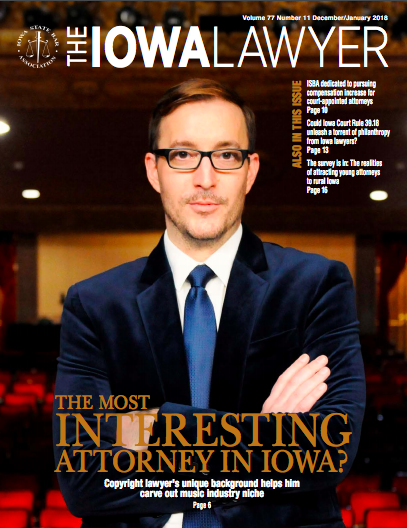
The December/January issue of The Iowa Lawyer magazine is out! Click here and scroll to page 13 to read the final piece in my four-part series on the practical application of Iowa’s new succession planning rule for lawyers and law firms. “Giving for good: Practical application of Iowa Court Rule 39.18” covers how the rule may well significantly increase charitable giving by Iowa attorneys through both business succession planning and personal estate planning.

Iowa Court Rule December Article

While the series is targeted toward Iowa lawyers, the advice throughout can be applicable to individuals in need of personal estate planning as well as business owners in need of business succession plan. Click on the following links to read the past articles related to the Rule.

  1. September issue: overview of Iowa’s new succession planning rule and the importance of personal estate planning as well
  2. October issue: 8 simple steps for a successful business succession
  3. November issue: benefits of a supplemental plan

This month’s Iowa State Bar Association publication also includes features on: issues and roles of startups and in-house counsel; Larry Johnson Jr., the new State Public Defender; cover story on intellectual property lawyer, Brandon Clark; periodic cost-of living adjustments for indigent defense compensation; data on the realities of attracting young attorneys to the state’s small towns; and the Kids First Law Center, among other great pieces.

If you would like to discuss any questions or concerns related to personal estate planning or a succession plan for your business (including law firms), don’t hesitate to contact me.

5 giving packages

It’s been said, “You should be giving while you are living, so you’re knowing where it’s going.” Giving now allows you more say over how your gifts are handled, and you’ll get to experience the joy that comes with helping the causes you care for most. Gifts to charities made during your lifetime also provide significant tax advantages. Here are five pro tips to stretch your charitable dollar.

Pro tip #1: Don’t give cash.

Sure, it’s easiest to give by cash or check. But, cash gifts are not tax-wise gifts…almost any other asset is a smarter, tax-wise gift than cash! As you’ll see throughout this short article, it makes much more tax sense to give other, less obvious assets.

giving-cash


Pro tip #2:  Use the federal income tax charitable deduction.

I once read a Forbes article where the journalist said she cringes at church, when the collection plate goes around. The reason? The columnist worries churchgoers who toss in cash aren’t keeping records, and so are losing money by not claiming the federal income tax charitable deduction.

I don’t go that far, I don’t cringe in church, but I do think we should all keep records of our charitable gifts. What information you have to keep, and may need to provide to the IRS, depends on the size of your gift.

Pro tip #3: Use appreciated assets.

Gifts of long-term capital assets can receive a double federal tax benefit. Long-term capital assets may include items such as stock, real estate, and farmland, or even artwork, or collections like stamps or coins. The first tax benefit was just discussed; donors can receive an immediate federal income tax charitable deduction, equal to the fair market value of the long-term capital asset. Second, assuming the donor owned the asset for more than one year, the donor can avoid long-term capital gain taxes which would have otherwise been owed if the asset was sold instead of donated.

https://www.gordonfischerlawfirm.com/gifts-of-long-term-versus-short-term-capital-gain-property/

Pop quiz!

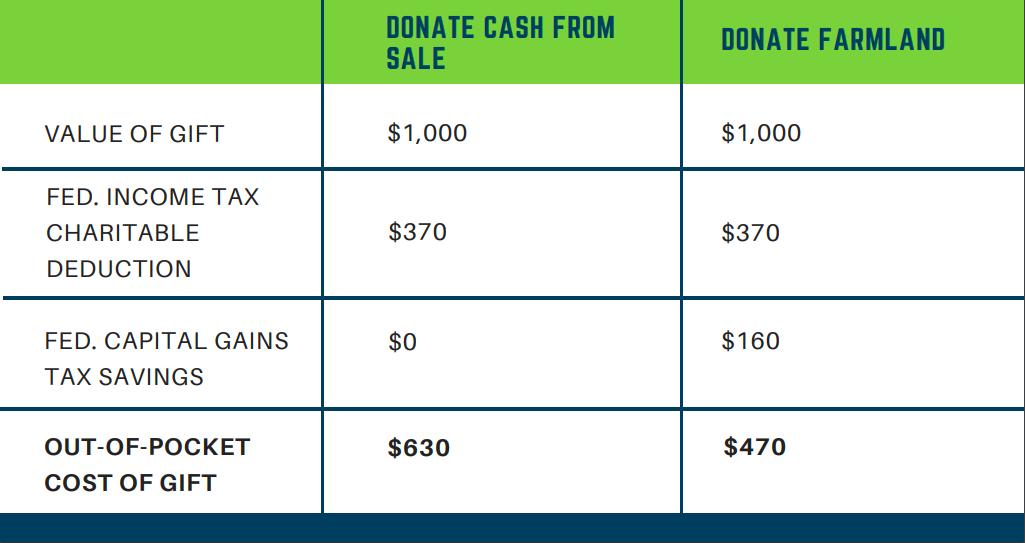
Let’s look at a concrete example to make sure the first three pro tips are clear. Pat owns farmland and she want to give one acre. Let’s assume one acre has a fair market value of $1,000. She wants to use the farmland to help her favorite causes. Which would be better for Pat — to sell the farmland and donate the cash, or give the farmland directly to her favorite charities? Assume the farmland was originally purchased at $200 (basis), Pat’s income tax rate is 37%, and her capital gains tax rate is 20%.

donate farmland over cash table

NOTE: Above table is for illustrative purposes only. Only your own financial or tax advisor can advise in these matters.

Pat receives a double benefit; she gets a federal income tax charitable deduction equal to the fair market value of the asset, AND avoids paying capital gains tax.

Pro tip #4: Make gifts which are eligible for the Endow Iowa Tax Credit

Through the Endow Iowa Tax Credit Program, donors can receive a 25% state tax credit for gifts made during lifetime. Endow Iowa has three requirements to qualify. The first two requirements are simple, but the third requirement can be tougher to meet.

  1. The gift must be given to, and receipted by, a community foundation. Opening a fund at your local community foundation is easy.
  2. The gift must be made to an Iowa charity. If it’s a national charity, and not a statewide or local organization, you simply need to check if they have an Iowa arm, and many do. In other words, to get the Endow Iowa tax credit, you couldn’t give to Girl Scouts of America, while you could give to Girl Scouts of Greater Iowa. To get the Endow Iowa tax credit, you couldn’t give to National Public Radio, but you could give to Iowa Public Radio.
  3. This third requirement is a bit more difficult than the first two. The Endow Iowa Tax Credit Program was designed to encourage endowments. Endowment means a permanent fund—something that will go on forever. So, to get the Endow Iowa tax credit, there is a limit on spending; you can only give out a maximum of 5% per year. This may, or may not, square with your charitable goals. Yet, for a tax credit of 25% off your gift, it’s something to seriously consider.

Endow Iowa Tax Credits are capped. The Iowa Legislature sets aside a pool of money for Endow Iowa, and it’s available on a first-come, first-served basis. Submitting an application at the beginning of the tax year is advised, as tax credits often run out toward year’s end. However, you can submit your application to be placed on the wait list for the next year’s tax credits.

Endow Iowa also has a cap for individuals and couples. Tax credits of 25% of the gifted amount are limited to $300,000 in tax credits per individual for a gift of $1.2 million, or $600,000 in tax credits per couple for a gift of $2.4 million (if both are Iowa taxpayers).

giving compass hand

Pro tip #5: Combine Pro Tips #1-4 for dramatic tax savings.

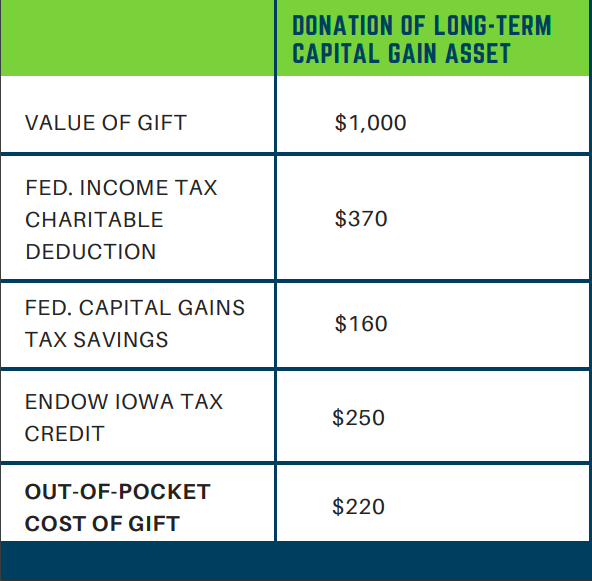
Combine the first four pro tips! If you combine the first four pro tips, you can achieve dramatic tax savings. Let’s look again at the case of Pat and her donation of a long-term capital gain asset (her farmland) with the addition of the Endow Iowa Tax Credit. Check out Pat’s tax savings:

Endow Iowa tax credit table

NOTE: Above table is for illustrative purposes only. Only your own financial or tax advisor can advise in these matters.

Pat gave her favorite charity $1,000 in the form of a long-term capital gain asset. After Pat combines the federal income tax charitable deduction, the capital gains tax savings, and the Endow Iowa Tax Credit, the out-of-pocket cost of that gift of $1,000 is less than $250. Because her gift was endowed, it will be invested by the local community foundation and presumably will grow. It will continue benefiting the charities Pat cares about, forever…talk about a legacy!

Let’s Talk

Remember, all individuals, families, businesses, and farms are unique and therefore have unique tax and legal issues. This article is presented for informational purposes only, not as tax advice or legal advice for an individual’s situation. If you would like to discuss how you can help the causes you’re passionate about, while also making smart tax decisions, don’t hesitate to reach out via email or phone (515-371-6077).