
Posts

woman in front of painting

If you’re growing an art collection it brings up an interesting situation: how do you incorporate your prized pieces into your estate plan? Sure, you likely don’t have an authentic da Vinci, Renoir, or Klimt just hanging in your living room, but maybe you have a couple of pieces you inherited or a burgeoning modern art collection.

Value of a Passion

For most collectors the art isn’t about monetary value, but more so about a passion for a certain period, artist, or medium. Collecting is often an act of genuine appreciation for the fine arts. Considering both the intrinsic and market value of your art collection it’s ESSENTIAL you include it as a part of your estate plan. The collection is, after all, a part of your total estate’s value and they way it’s handled in your estate plan could impact the value of your gross estate in regards to the federal estate tax. When it comes to the estate planning goal of avoiding such taxes and fees the appraised value of your art is paramount to consider. Naturally, you want your collection to be well-treated following your passing, as well as retain its value.

Let’s go through some important steps and elements to consider.

Assemble Documentation

The value of the collection will be important to the estate plan. If you haven’t done so already, you must correctly catalog, photograph, insure, and appraise the collection. You should also gather all documentation such as appraisals and bills of sale that will need to accompany the artwork as it changes hands upon your estate plan’s execution.

Weigh Your Options

With an art collection, there are three main options for disposition within your estate plan (or to be executed during your life).

Donate

Donating your art to a charitable organization or a museum is an excellent way to practice smart charitable giving. It can also be one of the more simple options. Donate through your estate plan following your death and the estate will receive a tax deduction based on the current valuation. Give while you’re living and you can take an income tax deduction, also based on the value of the piece or collection at the time of the donation.

With this option, you and the recipient organization should agree to signed terms and conditions BEFORE the artwork delivery. Details can include specifics as to where and how the art is to be displayed if you want your name on the signage next to the painting and similar details.

Bequest Artwork to your Loved Ones

Another common option is to keep the art within the family by passing along the art along to your estate’s heirs. Yes, you could gift each individual piece to each family member, but if you want to keep the collection intact you could transfer the collection to a trust you create while living that can be updated and changed during your lifetime. A trust is a solid estate planning tool that allows your named trust beneficiaries to avoid estate tax and probate complications and fees. In the formation of your trust, you can also define the terms for the care and condition of the artwork.

You could instead bequest the collection to an entity like an LLC you create. In this case, your heirs would own interest in the LLC instead of each owning a piece of art. In your estate plan and in the development of the entity you can appoint a manager (or multiple managers) who make sales or purchasing decisions for the collection.

Sell

It goes without saying that art is expensive—to buy and to sell. There are benefits (and detriments) to this option during life and after death, but waiting to sell until after death means the art’s value will be included in the estate. As such the capital gains tax could be lessened or entirely eliminated because the tax basis for the art collection is increased to fair market value at the time of death, instead of what you paid for the art/collection. If you instead would like to sell while alive you can likely expect to pay a capital gains tax on top of a sales commission fee and sales tax (among other potential fees).

Give, gift, sell—whatever option you choose, select a plan that allows you to feel at peace with where and to whom your collection is headed.

Enlist an Expert

Regardless of what option you want to pursue in the disposition of your art work, you need to work with an experienced estate planner who can help navigate the complexity of your estate. It’s your estate planning lawyer who can help you establish a framework for passing along your artwork to your chosen beneficiaries.

Discuss With Your Family

Depending on your family dynamic, discussing your estate plan with your loved ones can be difficult. It can bring up emotion and hard topics like mortality, however, to avoid litigation, mitigate in-fighting, and help determine what’s the best course of action forward for your property it’s necessary. When it comes to your art collection, your heirs may not feel the same way about the artwork that you do and knowing these opinions is critical in the decision of what to do with the collection.

When having the conversation, cultivate an environment in which your family can discuss openly and freely without judgment. You want their honest opinions as a part of your decision in what to do with your collection in the event of your passing.

art graffiti


Just as the art itself can be exceedingly complex, so can incorporating said art into an estate plan. You probably have questions; don’t hesitate to reach out at any time via email or phone (515-371-6077). I offer a free one-hour consultation and would love to help you protect your artistic assets through quality, individualized estate planning.

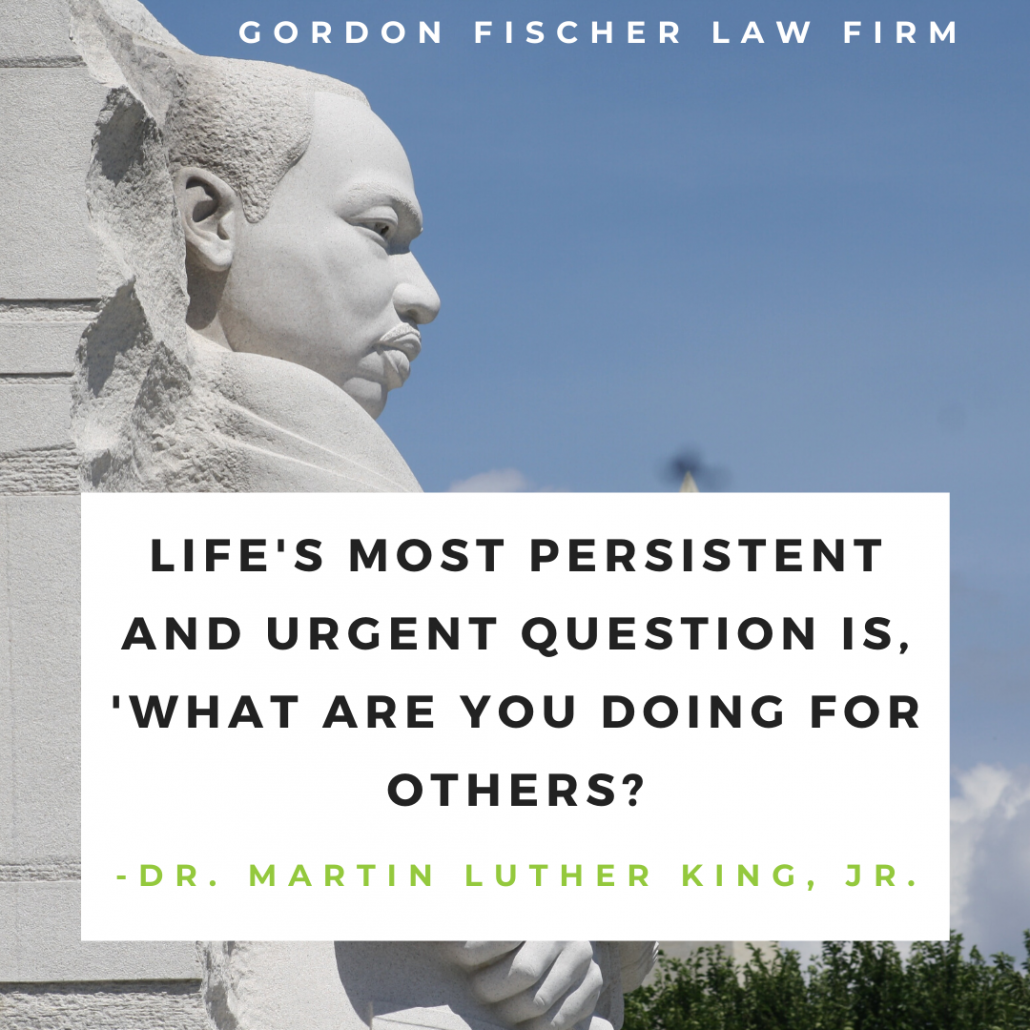
Dr. Martin Luther King Jr memorial

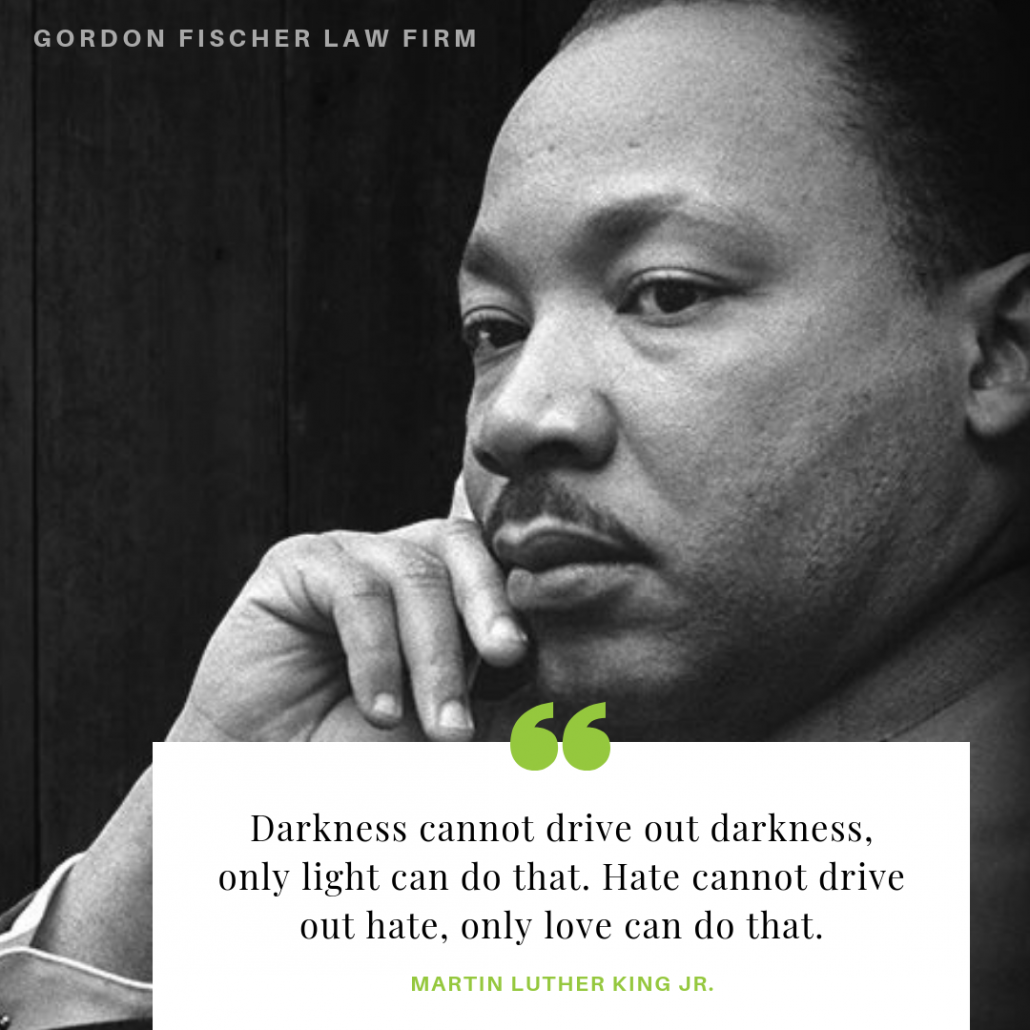
Today we celebrate Dr. Martin Luther King, Jr. and his passion, constancy, and determination in making America live up to its professed ideals and fulfill “the promise that all men, yes, black men as well as white men, would be guaranteed the unalienable rights of life, liberty, and the pursuit of happiness.” His powerful impact belies the brevity of his life—a public career that lasted just a dozen years, from the Montgomery, Alabama, bus boycott in 1956 to the sanitation workers’ strike in the Memphis, Tennessee where he was assassinated in 1968 at the age of 39.

When we think of Dr. King, it’s often of his tireless campaign for racial justice, but that is shortchanging his all-encompassing vision for a better America involving poverty, health, and women’s rights. The social justice reforms he championed and his commitment to nonviolent direct action in order to achieve them led to his receiving the Nobel Peace Prize in 1964. Notably, he donated the entirety of his award — $54,123—to the civil rights movement.

I see Dr. King’s examples of generosity and commitment to the betterment of our world being practiced every day by Iowans who support the nonprofit organizations in their communities through charitable giving. Many ensure their support will continue after even after death, by creating estate plans that include legacies for their favorite charities.

Leaving a legacy is one of the most important things we can do in life because it enables us to carry our influence, our values, and our convictions into the future. Our lives may not have the kind of profound historical impact of Dr. King’s, but our individual legacies are no less consequential to the people we love and the organizations whose missions we care about. What will your legacy be?

What will your legacy be? Don’t hesitate to contact me for a free charitable giving consultation. As Dr. King said: “The time is always right to do what is right.”

Marting Luther King Jr. and American Flag

Martin Luther King Jr. Day is tomorrow (January 20) I think it’s important to pay tribute to a man who truly championed ideals of equity, freedom, peace, and justice. Among his many accomplishments, Dr. King tirelessly pushed for nonviolent activism and peaceful resolution to human rights issues. He reportedly wrote five books and gave hundreds of speeches in a single year…more than most of us could produce in a lifetime. And, there’s no doubt that he was a key player and influencer in the passage of the U.S. Civil Rights Act of 1964. Dr. King was subsequently was awarded one of the highest honors in the world in 1964—the Nobel Peace Prize—for “his dynamic leadership of the Civil Rights movement and steadfast commitment to achieving racial justice through nonviolent action.” (He donated the prize money, $54,123, back to the civil rights movement.)

Dr. King and his lasting legacy can undoubtedly serve as an inspiration to us all. I see his dream of a better world—a better future for all—exemplified in action by the hardworking Iowa-based nonprofit organizations. I also see his lessons being practiced by the wonderful donors who support these organizations and advance their missions.

So, yes, it’s nice to have a day off of work, but make certain the day doesn’t pass you by without setting a plan in place to perform some form of service for others.

Dr. King tirelessly pursued the advancement of human rights for the greater good and we can honor him by practicing forms of charitable giving as a way to advance our communities. Be it through volunteering time to an organization that speaks to your heart (remember, certain costs associated with volunteer can be tax deductible), setting up a donor-advised fund, or simply writing a list of the nonprofits you would like to include as beneficiaries in your will, you too can set out on an honorable service-oriented path and inspire your friends, family, and colleagues to follow suit.

MLK Jr. Day Quote

Dr. King’s lessons resonate with our hearts and heads because we too have dreams of making our corners of the world a better place to learn, live, and grow through service. Maybe Dr. King’s commitment to “practice what you preach” mentality has inspired you this year to give charitably more and more often. Maybe you considered his question, “What’s your life’s blueprint?” and decided to form the charity you’ve wanted to establish for a long time. Either way, don’t hesitate to contact me for a free consultation. As Dr. King said: “The time is always right to do what is right.”

man with fireworks - charitable giving

With ringing in the new year comes the inevitable resolutions to be happier, healthier, more productive…all good intentions. But, what if this year you make a different kind of resolution—an actionable goal that could make a difference in the causes you care about? How about a goal that goes beyond yourself and could also have a positive impact on your community? This year I implore you to make at least one charitable giving goal. A giving goal can be a “resolution” you actually keep after the snow melts. How? With the right plan in place!

woman looking at fireworks

Similarly, I encourage my clients to determine their estate planning goals. These goals help guide me in drafting a personalized estate plan and determining which documents and provisions are needed. After all, every Iowan, family, and business is unique. Charitable giving goals can work the same way as a guiding blueprint for the who, what, when, and why of giving.

Use the following information to set your charitable giving goals for the new year!  

tips for setting charitable giving goals

Set a budget.

Of course, to begin, you’ll need to examine your entire budget including income, committed expenses (such as rent/mortgage payments, all bills, healthcare costs, etc.), to determine your discretionary income—this is the money you have left over after your committed expenses.

Along with your budget you should also consider whether larger one-time donations or recurring (perhaps monthly) donations work better for your budget, personality, and spending habits. A one-time donation may help prevent money from being spent on other discretionary choices. On the other hand, a repeated, monthly donation may help divide the total amount up into manageable sums. And, monthly donations can often be configured to automatically be made from your account which makes it easy to set the figure at the beginning of the year and make it a regular expenditure. Nonprofit organizations are grateful for all charitable contributions, but recurring, monthly gifts make their budgeting easier.

Look at the big picture.

big picture giving

Step back from the accounting weeds for a moment and sit down with a plain piece of paper. Write down the causes and organizations you care about. If you feel passionate about a certain issue, but don’t know of a specific charity off the top of your head that is addressing the issue, make a note of it. Your list doesn’t have to be long, just true to you.

Then, commit to research to determine which organizations are going to invest your money toward a mission that aligns with your own ethos. Some things to consider about a charity:

  • Financial health. Tax-exempt organizations have to file Form 990 (officially, the “Return of Organization Exempt From Income Tax”)  with the IRS. This form details the organization’s financial information and is available to the public. Do a search on a database such as the Foundation Center, for a charity you’re considering donating to, and review the financial data.
  • What’s the charity’s commitment to transparency? How about accountability?
  • What’s the organization’s Charity Navigator rating, if any? Charity Navigator’s rating system examines a charity’s performance in the areas of financial health and accountability/transparency, and presents it in an easily discernible way.
  • Is the organization a public charity or private foundation? This will have an impact on your federal income tax charitable deductions.
  • Is the organization based in the U.S. or is it a foreign charity? (Generally, if the donee is a foreign charitable organization, an income tax deduction is unavailable.)

Of course, if you’re personally involved with an organization through volunteering, fundraising, or the like, that’s a good way to “know” the charities as well. Research will empower and embolden your charitable goals if you know your donation is going to an upstanding, trustworthy operation.

Seek advice.

If you made a goal to increase muscle mass, you would likely seek the services of a personal trainer. If your goal is to eat healthier? Maybe a nutritionist. When the goal is to be committed to smart charitable donations, you’ll want to enlist the likes of your lawyer, accountant, and/or financial advisor. Seek out a professional who has experience working with nonprofits, the tax code, and strategies for intelligent giving. This pro can and should be able to help you put your plan into action.

(This tip also applies to practicing charitable giving through your estate plan—something you should definitely hire an estate planning lawyer to make sure the estate plan is properly, legally executed.)

Focus efforts / limit charitable targets.

Smart charitable giving means a vested commitment toward a cause or organization’s advancement, as well as financially beneficial tax deductions for you. Unlike investments where the general advice is to diversify to reduce risk, in the realm of charitable giving the opposite may well be true. You may well receive the greatest “return” by concentrating your giving on a fewer, rather than more, organizations. Consider giving to two or three nonprofits to magnify your impact.

If you’re ready to commit to charitable giving goals you can actually keep I’m happy to offer advice and strategy. Don’t hesitate to reach out via email (gordon@gordonfischerlawfirm.com) or by phone (515-371-6077).

charitable gift tax limits - hand holding christmas gift

If you choose to itemize your taxes, charitable contributions can reduce your tax bill. Generally you would choose to itemize when the combined total of your anticipated deductions (like charitable gifts) add up to more than the standard deduction. For 2019 taxes the standard deductions are:

  • $12,200 for single individuals
  • $12,200 for married, filing separately
  • $24,400 for married filing jointly
  • $18,350 for head of household

If you do choose to itemize, limits on federal income tax charitable deductions are quite high, but they do exist. Keep this in mind as you make any year-end donations. The specific limitations are complicated, and there are numerous exceptions. The limits are based on your AGI (adjusted gross income). AGI is an individual’s total gross income minus specific deductions.

A quick rule-of-thumb for different types of donated assets to public charities:

  • Appreciated capital gains assets (such as stock) up to 20% of AGI
  • Non-cash assets up to 30% of AGI
  • Cash contributions, up to 60% of AGI
  • You can deduct transportation costs and other expenses related to volunteering

Note that these rates are for public tax-exempt organization and private operating foundations. Contributions to certain private foundations, veterans organizations, fraternal societies, and cemetery organizations are limited to 30% adjusted gross income. (Check out these IRS status codes and deductible limits if you’re unsure of an organization’s limit.)

As I mentioned, most people won’t exceed these limits indicated above, but it can happen. For instance, if Jane Donor is a retiree living off of savings and donates more than her investments yield over the year, her limit could be exceeded. The good news is that in this case the IRS allows you carry over excess contributions for up to five following tax years.

Don’t forget to take these steps if you plan to itemize your charitable deductions:

  • Make sure the nonprofit organization is a 501(c)(3) public charity or private foundation
  • Keep a record of the contribution (usually the tax receipt from the charity)
  • Depending on the donation amount/type, you may need to obtain a qualified appraisal to substantiate the claimed value of the deduction
  • Subtract the value of any benefits you received for your charitable contribution before you deduct it

I’m happy to advise on your situation and help you maximize your charitable giving for this tax year. I can be reached by phone at 515-371-6077 and by email at gordon@gordonfischerlawfirm.com.

lights on roof

Thanks for reading the 25 Days of Giving series where w a’re “unwrapping” important info on various aspects of charitable giving each day through Christmas. Share with friends, family, & colleagues to inspire others to also make meaningful gifts this season.

If you’re making a non-cash charitable donation of over $5,000, first off, high five! That’s going to go a long way toward helping your favorite charity or advancing a cause you feel passionate about. Because you’re a smart donor, you’re also probably planning to claim the federal income tax charitable deduction as a way of reducing your taxes. In order to do this, gifts of that size come with specific requirements from the IRS that you’ll want to be sure to meet.

Requirements for “qualified appraisal” and “qualified appraiser”

Non-cash gifts of more than $5,000 in value, with exceptions, require a qualified appraisal completed by a qualified appraiser. The terms “qualified appraisal” and “qualified appraiser” are very specific and have detailed definitions according to the IRS.

Qualified appraisal

money on table

A qualified appraisal is a document which is:

  1. made, signed, and dated by a qualified appraiser in accordance with generally accepted appraisal standards;
  2. timely;
  3. does not involve prohibited appraisal fees; and
  4. includes certain and specific information.

Let’s further examine each of these four requirements.

“Qualified appraiser:” Appraiser education and experience requirements

An appraiser is treated as having met the minimum education and experience requirements if she is licensed or certified for the type of property being appraised in the state in which the property is located. For a gift of real estate in Iowa, this means certification by the Iowa Professional Licensing Bureau, Real Estate Appraisers.

Further requirements for a qualified appraiser include that s/he:

  1. regularly performs appraisals for compensation;
  2. demonstrates verifiable education and experience in valuing the type of property subject to the appraisal;
  3. understands she may be subject to penalties for aiding and abetting the understatement of tax; and
  4. not have been prohibited from practicing before the IRS at any time during three years preceding the appraisal.

Also, a qualified appraiser must be sufficiently independent. This means a qualified appraiser cannot be any of the following:

  1. the donor;
  2. the donee;
  3. the person from whom the donor acquired the property [with limited exceptions];
  4. any person employed by, or related to, any of the above; and/or
  5. an appraiser who is otherwise qualified, but who has some incentive to overstate the value of the property.

Timing of appraisal

clock against background s

The appraisal must be made not earlier than 60 days prior to the gift and not later than the date the return is due (with extensions).

Prohibited appraisal fees

The appraiser’s fee for a qualified appraisal cannot be based on a percentage of the value of the property, nor can the fee be based on the amount allowed as a charitable deduction.

Specific information is required in appraisal

Specific information must be included in an appraisal, including:

  1. a description of the property;
  2. the physical condition of any tangible property;
  3. the date (or expected date) of the gift;
  4. any restrictions relating to the charity’s use or disposition of the property;
  5. the name, address, and taxpayer identification number of the qualified appraiser;
  6. the appraiser’s qualifications, including background, experience, education, certification, and any membership in professional appraisal associations;
  7. a statement that the appraisal was prepared for income tax purposes;
  8. the date (or dates) on which the property was valued;
  9. the appraised fair market value on the date (or expected date) of contribution;
  10. the method of valuation used to determine fair market value;
  11. the specific basis for the valuation, such as any specific comparable sales transaction; and
  12. an admission if the appraiser is acting as a partner in a partnership, an employee of any person, or an independent contractor engaged by a person, other than the donor, with such a person’s name, address, and taxpayer identification number.

Appraiser’s dated signature and declaration

Again, a qualified appraisal must be signed and dated by the appraiser. Also, there must be a written declaration from the appraiser she is aware of the penalties for substantial or gross valuation.

Reasonable cause

Tax courts have held that a taxpayer’s reliance on the advice of a professional, such as an attorney or CPA constitutes reasonable cause and good faith if the taxpayer can prove by a preponderance of the evidence that: (1) the taxpayer reasonably believed the professional was a competent tax adviser with sufficient expertise to justify reliance; (2) the taxpayer provided necessary and accurate information to the advising professional; and (3) the taxpayer actually relied in good faith on the professional’s advice.

If this sounds like a lot, know you don’t have to navigate these requirements just by yourself. Contact me at any time to discuss your situation and charitable giving goals. We’ll figure out the best course of action together.

Thanks for reading the 25 Days of Giving series; this is the “gift” for day 17! Plan on coming back to the blog every day from now through Christmas Day.

Might this be a good season to consider being more generous to your place of worship? Generally, churches are considered to be public charities. This means they are typically exempt from local, state, federal, and property taxes. This also means donations can be deducted if you itemize your federal income taxes.

Allow me to offer up four tips which could allow you to give more to your church and pay less in taxes. It’s a win-win situation: make a financially wise contribution AND a difference in an organization you care about.

Tip 1: Consider All Your Assets

You need to consider ALL your assets for smart giving. Don’t just consider cash, but look at your entire basket. Here are three real-world examples:

  1. I know a farmer who doesn’t have a lot of cash on hand—we’ve all heard the phrase, “land rich, cash poor.” But, farmland itself can be a very tax-savvy gift. So are gifts of grain.
  2. I know a young person who’s self-employed. Again, not lots of cash on hand. But, this person inherited an IRA from a relative, and must make annual required minimum distributions [RMDs]. IRA RMDs can be a tax-wise gift.
  3. I also know a couple who recently retired. The couple has three life insurance policies, which made lots of sense when their kids were younger. Their kids are now grown and independently successful. A paid-up life insurance policy could be signed over to their favorite charity.

Your individual facts and circumstances are unique. Consider seeking a qualified attorney or financial advisor to look at your whole basket of assets.

Tip 2: Consider Long-Term Capital Gains Property

Gifts of long-term capital assets, such as publicly-traded stock and real estate, may receive a double federal tax benefit. Donors can receive an immediate charitable deduction off federal income tax, equal to the fair market value of the stock or real estate.

Records are required to obtain a federal income tax charitable deduction. The more the charitable deduction, the more detailed the recording requirements. For example, to receive a charitable deduction for gifts of more than $5,000, you need a “qualified appraisal” by a “qualified appraiser,” two terms with very specific meanings to the IRS. You need to engage the right professionals to be sure all requirements are met.

Second, assuming the donor owned the asset for more than one year, when the asset is donated, the donor can avoid long-term capital gain taxes which would have been owed if the asset was sold.

Let’s look at an example to make this clearer. Sara Donor owns stock with a fair market value of $1,000. Donor wants to use the farmland to help her favorite causes. Which would be better for Sara? To sell the stock and donate the cash? Or, gift the stock directly to her church? Assume the stock was originally purchased at $200 (basis), Sara’s income tax rate is 37%, and her capital gains tax rate is 20%. 

Donating cash versus donating long-term capital gain assets, such as publicly-traded stock Donating cash proceeds after sale of stock Donating stock directly
Value of gift $1,000 $1,000
Federal income tax charitable deduction ($370) ($370)
Federal capital gains tax savings $0 ($160)
Out-of-pocket cost of gift $630 $470

NOTE: ABOVE TABLE IS FOR ILLUSTRATIVE PURPOSES ONLY. ONLY YOUR OWN FINANCIAL OR TAX ADVISOR CAN ADVISE IN THESE MATTERS.

Again, a gift of long-term capital assets made during lifetime, such as stocks or real estate, can be doubly beneficial. The donor can receive a federal income tax charitable deduction equal to the fair market value of the asset. The donor can also avoid capital gains tax.

Tip 3: Consider Endow Iowa Tax Credit Program

Under the Endow Iowa Tax Credit program, gifts made during lifetime can be eligible for a 25% tax credit. There are three requirements to qualify:

  1. The gift must be given to, or receipted by, a qualified Iowa community foundation (there’s a local community foundation near you).
  2. The gift must be made to an Iowa charity.
  3. The gift must be endowed (i.e., a permanent gift). Under Endow Iowa, no more than 5% of the gift can be granted each year – the rest is held by, and invested by, your local community foundation. This final requirement is a restriction, but still, in exchange for a 25% state tax credit, it must be seriously considered by Iowa lawyers and donors.

Tip 4: Combine the First Three Tips!

Let’s look again at the case of Sarah, who is donating stock per the table above. If Sarah makes an Endow Iowa qualifying gift, the tax savings are dramatic:

Tax benefits of donating long-term capital gain asset with Endow Iowa
Value of gift $1,000
Federal income tax charitable deduction ($370)
Federal capital gains tax savings ($160)
Endow Iowa Tax Credit ($250)
Out-of-pocket cost of gift $220

NOTE: ABOVE TABLE IS FOR ILLUSTRATIVE PURPOSES ONLY. ONLY YOUR OWN FINANCIAL OR TAX ADVISOR CAN ADVISE IN THESE MATTERS.

Note Sara’s significant tax savings! In this scenario, Sara receives $370 as a federal charitable deduction, avoids $160 of capital gains taxes, and gains a state tax credit for $250, for a total tax savings of $780. Put another way, Sara made a gift of $1,000 to her favorite charity, but the out of pocket cost of the gift to her was less than than a quarter of it.

giving package with green spruce

Each donor’s financial situation and tax scenario is unique; consult your own professional advisor for personal advice. I’m happy to offer you a free consult to discuss your charitable giving options. I can be reached by phone at 515-371-6077 or by email.

blue and tan present

Thanks for reading the 25 Days of Giving series! Plan on coming back to the blog every day from now through Christmas Day.

In December there is gift giving with wrapping paper abound, but when it comes to charitable giving the important assets (like your retirement assets) don’t need ribbons or bows. Let’s first focus on a major retirement asset giving tool, the IRA charitable rollover.

IRA Charitable Rollover

This federal law allows donors age 70½ and older to make direct distributions of up to $100,000 from his/her IRA each year to any qualified charity. The donation is not treated as taxable income and, moreover, counts toward the donor’s required minimum distribution for that year.

At the end of 2015, Congress made the IRA charitable rollover a permanent giving tool, unlike the year-to-year renewal basis they had operated on since the introduction of the IRA charitable rollover in 2006 (as part of the Pension Protection Act).  The result? Tax savvy IRA account holders can now plan charitable giving in a more reliable way.

Other Options

There are two other accessible ways to direct retirement benefit plan assets to your favorite charity:

  • Gifts at death via beneficiary designations.
  • Withdrawals over age 59½ followed by outright deductible gifts that can effectively result in tax-free retirement plan gifts.

Keep in mind, too, that the IRA charitable rollover applies only to IRAs. These two options — gifts at death via beneficiary designations and withdrawals by those older than 59½ — will work with virtually all qualified retirement plans, including 401(k)s and 403(b)s. baubles on a green tree

Naming your favorite charity as beneficiary

Donors considering charitable bequests may not realize that they can make a meaningful gift simply by naming their favorite charity as the beneficiary of an IRA, 401(k), 403(b), or other retirement plan. Giving retirement assets in this way is easy, and does not require drafting or amending a will or trust. A donor simply has to contact his/her financial institution holding the retirement benefit plan and request a change of beneficiary form.

Note, however, that if the account holder is married, the spouse should be informed and may have to consent to the gift. The plan assets may also be left to a charitable or marital trust[s]. In the latter case, professional advisors should be consulted. (Hint: call me!).

Give now!

Donors could also choose to make current gifts using funds withdrawn from their qualified retirement plans. Individuals over age 59½ may generally withdraw funds from retirement plans without penalty, make a gift with these funds, and then claim an offsetting charitable deduction. In most cases, a gift made in this manner will be a “wash” for tax purposes.

Let’s take a quick example. Rebecca (age 64) wants to make a very generous donation of $10,000 to her favorite charity. She can withdraw $10,000 from her IRA or 401(k) account, and make that donation. Assuming she itemizes her tax deductions, the $10,000 donation should leave her “even Steven” with regard to taxes – the $10,000 in income is offset by the $10,000 charitable deduction, resulting in zero net income taxes.

Advice is Priceless

The decision to want to give to you favorite causes this season is easy. Knowing exactly where to start with smart giving can be a little more complex. If you have questions about the IRA charitable rollover or any other giving strategy, don’t hesitate to reach out via email or by phone (515-371-6077). My firm’s mission is to maximize charitable giving in the state of Iowa and I want to help YOU maximize your personal charitable giving (in a way that is also tax efficient).

christmas words giving

Thanks for the reading the 25 Days of Giving series…almost as good as this whiskey advent calendar, am I right? Each day through Christmas, I’m covering different aspects of charitable giving for both donors and nonprofit leaders. Have a topic you want covered or question you want answered  regarding charitable giving? Contact me.

Sure, info on tax incentives is important and details on donating stock are interesting, but sometimes just a good quote has the power to spark giving. According to this study, 31% of ALL online charitable giving in the U.S. happens in the month of December! If you’re a nonprofit looking to increase end-of-year donations or even a donor seeking to inspire your friends and family to give charitably, these quotes could come in handy.

The true meaning of Christmas? Giving.

giving snowflake quote

Giving makes you happy.

Happiest giving quote

Not giving is not an option for the causes you care about.

Doing nothing giving quote

Giving while you’re living means making a difference in the future.

Real generosity

Giving can be complex, but it doesn’t have to be. Enlist an expert to help you meet your giving goals.

Aristotle giving quoteGiving is a privilege

Rockfeller giving quote

Giving “costs nothing.”

giving quote free

What you give is what you get.

get out of this world giving

Giving means a lasting legacy.giving immortal quote

If you want to share one of these quotes, don’t hesitate to tag Gordon Fischer Law Firm on Facebook, Twitter, and Instagram.

Candles and christmas tree for charity auction

Thanks for reading the 25 Days of Giving series! Share with friends, family, & colleagues. Knowledge is indeed a “gift” when it comes to encouraging and maximizing smart charitable giving

Headed to a holiday party this season? If it’s to celebrate/fundraise for your favorite charity, you might experience an auction (silent or otherwise). Charity auctions can be great fun and it feels like you’re giving back while also gaining a great gift to tuck under the Christmas tree!

Sometimes charity auction participants mistakenly believe their successful bids are completely deductible. However, since the individual receives the auction property, there is usually no federal income tax charitable deduction. But, if the bid can be shown to be in excess of the fair market value of the item, the amount in excess can be deducted as a charitable contribution.

The charity may make a “good faith estimate” of the fair value of the auction item before bidding commences.

Noel at charity auction

Let’s look at a few easy examples:

Example 1. A $50 gift certificate to a retail store is purchased at charity auction for $40. No deduction.

Example 2. A different $50 gift certificate to the spa is purchased at the charity auction for $70. This generates a $20 charitable deduction.

Example 3. You bid on and win a fruit basket for $30 at an auction supporting a local high school basketball program. The equivalent fruit basket at a local grocery store would cost $15, so you may receive a $15 tax deduction.

Unsure if your actions at a charity auction mean a charitable deduction? It’s always a good idea to get a second opinion. Also, if you’re a nonprofit leader planning on hosting a charity auction it’s advantageous to be briefed on all the tax and legal rules surrounding the event in case donors ask. I’m always happy to help and offer a free one-hour consultation. Reach me by phone at 515-371-6077 or by email at gordon@gordonfischerlawfirm.com.