
January 26, 2026

Before we get into what makes a good Whistleblower Policy, here are four real-life examples of why nonprofits need them:

  1. A long serving bookkeeper notices unexplained reimbursements approved by the executive director but fears reporting them because the director controls her job.
  2. A volunteer becomes aware that restricted donor funds are being used for unrelated expenses but does not know who to tell or whether speaking up could jeopardize their role.
  3. A staff member witnesses repeated harassment by a senior manager and worries that reporting the behavior will quietly end their career at the organization.
  4. A board member learns that required filings have not been made for several years and is concerned about personal liability if the issue is ignored.

In each of these situations, wrongdoing continues not because people are unaware of it, but because they do not feel safe reporting it. A clear Whistleblower and Retaliation Protection Policy is designed to solve exactly this problem.

As a member of a nonprofit organization, wouldn’t you want to know if someone inside the organization was acting illegally, unethically, or contrary to its mission? Nonprofits exist to serve the public good and depend heavily on trust, transparency, and ethical conduct. Yet studies consistently show that reporting drops sharply when organizations lack a clear and credible whistleblower policy.

A well drafted Whistleblower Policy creates a structured, trusted process for raising concerns. It protects individuals who come forward, helps leadership address problems early, and reduces
legal and reputational risk. This blog post explains what a whistleblower policy is, why it matters, who it protects, how it works in practice, and the best practices every nonprofit should consider adopting.

What It Means to “Blow the Whistle”

To “blow the whistle” means to report suspected wrongdoing within an organization. A whistleblower policy establishes formal guidelines for employees, board members, volunteers, and others to follow when they become aware of potential misconduct.

The goal is not punishment. The goal is early detection, accountability, and correction before harm spreads. Effective policies encourage reporting by assuring individuals that they can raise
concerns without fear of retaliation, job loss, or reputational damage. Federal and state laws across the United States reinforce this principle by protecting whistleblowers from retaliation and encouraging internal reporting before problems escalate.

Legal Framework and IRS Expectations

Federal law explicitly protects whistleblowers. Section 1107 of the Sarbanes-Oxley Act, codified at 18 U.S.C. § 1513(e), makes it a federal crime to knowingly retaliate against a person for providing truthful information to law enforcement about a possible federal offense. Penalties can include fines and imprisonment of up to ten years, and the law also prohibits destruction of evidence.

Practically speaking, this means nonprofit leaders must take whistleblower complaints seriously, preserve documents, and avoid any actions that could be perceived as retaliation, even indirectly. Iowa law reinforces these principles. The Iowa Nonprofit Corporation Act, Iowa Code chapter 504, imposes fiduciary duties of care, loyalty, and obedience on directors and officers. When credible concerns about misuse of funds, conflicts of interest, or legal noncompliance are raised and ignored, directors and officers risk breaching those duties. A whistleblower policy provides a documented process for receiving and addressing concerns, which can be critical in demonstrating that leadership acted prudently and in good faith.

Iowa nonprofits should also be mindful that retaliation claims may arise under Iowa common law, Iowa civil rights statutes, and federal employment laws applied in Iowa courts. Even volunteers and independent contractors may assert claims when adverse actions follow protected reporting.

The Internal Revenue Service reinforces these expectations through Form 990. Although a whistleblower policy is not technically mandatory, the IRS asks whether one exists and treats it as a hallmark of good governance. To meet the Form 990 standard, the policy must clearly state that the organization protects individuals who report suspected violations of law or organizational policy in good faith.

Why Whistleblower Policies Are Essential for Nonprofits

Nonprofits rely on public trust, donor confidence, and community credibility. This is especially true in Iowa, where many nonprofits operate in close-knit communities and rely on long-term relationships with donors, volunteers, and local stakeholders. Many Iowa nonprofits advocate publicly for accountability, fairness, and ethical conduct. That mission is undermined if similar misconduct is tolerated internally or handled informally behind closed doors.

A strong whistleblower policy helps Iowa nonprofits:

  • Identify problems early, when they are easier and less costly to fix
  • Reduce the risk of regulatory scrutiny by the IRS, Iowa Attorney General, or Iowa Secretary of State
  • Demonstrate that directors and officers are fulfilling their fiduciary duties under Iowa law
  • Protect staff, volunteers, and board members from retaliation
  • Preserve public trust in smaller communities where reputational harm can spread quickly

Without a clear policy, individuals may stay silent, misconduct may continue unchecked, and organizations may face far greater legal, financial, and reputational consequences later.

Who the Whistleblower Policy Is For

A whistleblower and retaliation protection policy should apply broadly. It should cover:

  • Employees
  • Officers and directors
  • Volunteers
  • Independent contractors
  • Vendors
  • Clients and other stakeholders

Even organizations with no paid staff need whistleblower protection. Volunteers often have direct access to sensitive information and must feel safe raising concerns.

When and Where to Report Misconduct

Concerns should be reported as soon as reasonably possible. Prompt reporting allows the organization to stop ongoing harm, preserve evidence, and respond appropriately. Best practice policies provide multiple reporting channels, such as:

  • A direct supervisor
  • Another manager or officer
  • A designated ethics or compliance contact
  • The board chair or audit committee
  • An external or anonymous reporting mechanism

Multiple options are essential, especially when the concern involves a supervisor or senior leadership.

Covered Wrongdoing

A well drafted policy clearly defines the types of conduct that may be reported, including:

  • Fraud or financial misconduct
  • Theft or misuse of organizational assets
  • Violations of law or regulations
  • Conflicts of interest
  • Discrimination or harassment
  • Violations of confidentiality obligations
  • Unsafe or unhealthy working conditions
  • Abuse of authority
  • Retaliation against whistleblowers

Clear definitions reduce uncertainty and encourage reporting.

Reporting Procedures

Effective policies explain how to report concerns and make the process accessible. Best practices include:

  • Clear written reporting instructions
  • Options for confidential or anonymous reporting
  • Identification of who receives and reviews reports
  • Escalation paths if concerns are not addressed

Good documentation protects both the whistleblower and the organization.

Investigation Procedures

Once a report is received, the organization must act promptly and responsibly. The policy should describe:

  • How investigations are initiated
  • Who conducts them
  • How evidence is collected and preserved
  • Expected timelines
  • How findings are documented and addressed

Investigations should be objective, thorough, and conducted by individuals with appropriate independence and authority.

Confidentiality

Confidentiality is critical to effective whistleblower protection. Policies should commit to maintaining confidentiality to the greatest extent reasonably possible. While absolute confidentiality cannot always be guaranteed, especially if legal proceedings follow, failing to promise confidentiality at all will strongly discourage reporting.

Protection Against Retaliation

The policy must clearly prohibit retaliation. Retaliation includes termination, demotion, harassment, intimidation, reduced hours, or any adverse action taken because someone reported
concerns in good faith. Anyone who retaliates should face discipline, up to and including termination or removal from office or board service.

Good Faith Reporting and False Allegations

Whistleblowers must act in good faith and have reasonable grounds to believe misconduct has occurred. Knowingly false or malicious allegations should result in discipline. Importantly, an allegation that cannot be substantiated does not mean it was made in bad faith.

Disciplinary Action and Outcomes

Policies should outline potential consequences when allegations are substantiated, including corrective action, discipline, or termination. They should also address consequences for retaliation and bad faith reporting.

Training and Communication

This is critical. A whistleblower policy is ineffective if people do not know it exists or how to use it.

For Iowa nonprofits, this section should align closely with other governance disclosures and practices reflected on IRS Form 990, including policies addressing conflicts of interest, document retention and destruction, compensation review, and Form 990 review and approval itself. The IRS looks at governance holistically, not in isolation. Best practices include:

  • Distributing the policy during onboarding
  • Providing periodic training
  • Including the policy in employee handbooks
  • Training investigators on process and confidentiality

Consistent implementation across these policies strengthens credibility if the organization’s governance practices are ever reviewed by the IRS or state regulators.

Support for Whistleblowers

This is equally important. Whistleblowers often experience stress, fear, or emotional strain. Providing access to support resources demonstrates a genuine commitment to ethical culture and
reinforces trust.

Policy Review and Updates

Whistleblower policies should be reviewed periodically and updated to reflect changes in law, organizational structure, and best practices.

Conclusion

A well designed whistleblower and retaliation protection policy is a cornerstone of strong nonprofit governance. It protects individuals, strengthens organizational integrity, and reinforces public trust.

For Iowa nonprofits, whistleblower protection should be viewed alongside other core governance practices reported on IRS Form 990, including conflict of interest policies, document retention policies, compensation approval processes, and board oversight procedures. These policies work together to demonstrate that directors and officers are meeting their fiduciary obligations under Iowa law.

Nonprofits should not treat whistleblower policies as boilerplate or check-the-box documents. They should be tailored to the organization’s structure, actively implemented, and supported by leadership.

I advise Iowa nonprofits on governance, compliance, and risk management. I work with Iowa charities, churches, foundations, associations, and membership organizations to draft, review, and align whistleblower policies with Articles of Incorporation, Bylaws, Form 990 disclosures, and the full suite of IRS-recommended governance policies.

If your Iowa nonprofit needs assistance drafting, reviewing, or updating a whistleblower policy or strengthening its overall Form 990 governance framework, contact me anytime. I offer free consultations. My email is: gordon@gordonfischerlawfirm.com


January 22, 2026

If your nonprofit holds financial assets—whether as operating reserves, short-term funds, or long-term endowments—having a written Investment Policy is essential for responsible stewardship and sound governance.

What is an Investment Policy?

An Investment Policy is a formal set of guidelines that explains who makes investment decisions, how those decisions are made, and what goals and limits guide investment activity. It provides clarity on acceptable asset types, risk tolerance, reporting expectations, and the procedures your organization uses to manage and monitor investments.

A well-crafted policy should:

  • Align investment activity with your mission and financial needs

  • Define roles and responsibilities for investment decision-making

  • Describe how investments will be selected, monitored, and evaluated

  • Explain risk management, diversification, and liquidity considerations

  • Establish reporting and oversight procedures for leadership and the board

Why It Matters

Here’s why an Investment Policy deserves attention:

1. Protects Your Organization from Poor Decisions
Investing without formal guidelines makes it easy to drift into unsupportable risk or inconsistent practices. A written policy helps safeguard assets and supports thoughtful decision-making.

2. Supports IRS Form 990 Reporting
While the IRS doesn’t require an Investment Policy, Form 990 asks detailed questions about investments and oversight. Having a documented policy makes reporting easier and more accurate, reducing stress at filing time.

3. Preserves Endowment and Long-Term Funds
For organizations with endowed funds or long-term financial commitments, a policy helps protect resources meant to last for generations by defining investment goals and risk thresholds.

In other words, funds in which the assets are intended to last in perpetuity and are required to support the organization’s programs and services over the long term.

Who Should Be Involved

A clear Investment Policy assigns responsibility so everyone knows who does what:

  • Board of Directors: Provides oversight, reviews performance, and updates the policy at least quarterly.

  • Finance or Investment Committee: May be formed to support decision-making and supervision.

  • Executive Director/Staff: Can monitor investments and coordinate with outside advisors.

  • Financial Advisor/Manager: Many nonprofits hire professionals to implement strategies consistent with the policy.

board training at wood table

Making Smart Investment Decisions

When your organization evaluates investment options, consider:

  • What are your short-, medium-, and long-term financial needs?

  • What level of risk is acceptable?

  • How liquid do assets need to be?

  • How will you measure performance and report results?

Answering these questions in advance—and formalizing them in policy—keeps decision-making consistent and aligned with your mission.

Regular Oversight & Review

Investments and financial markets change over time. That’s why your policy should include a process for regular monitoring and review. In that review, analyze performance measurement, risk assessment, and board evaluation.

Final Thoughts

A strong Investment Policy manages risk and gives confidence to your leadership, clarity to your staff, and credibility to donors and regulators. Thoughtful policy development can strengthen your nonprofit’s financial foundation and support its long-term mission.

Every nonprofit handles resources differently and your Investment Policy should reflect that. The right guidance can help you protect your assets while supporting the mission you care about most.

Curious about next steps? Connect with GFLF for a no-cost consultation.

January 21, 2026

Why Articles of Incorporation Matter More Than You Think

When people start a nonprofit, Articles of Incorporation often feel like a formality. Something you file once, put in a folder, and never think about again. In reality, Articles of Incorporation are one of the most important documents your nonprofit will ever adopt. They are the legal foundation of the organization. When they are clear and aligned with Iowa law and IRS expectations, everything that follows is easier. When they are vague, outdated, or copied from a generic template, problems tend to surface later, usually when the stakes are higher.

This guide is designed to explain what Articles of Incorporation actually do for Iowa nonprofits, what truly matters in drafting them, and how to approach this document with confidence.

How Articles Create a Nonprofit Under Iowa Law

Articles of Incorporation are the document that legally brings a nonprofit corporation into existence under Iowa law. Until they are filed and accepted by the Iowa Secretary of State, the organization does not exist as a legal entity. Once filed, the nonprofit can open bank accounts, enter into contracts, hold board meetings, and begin operating in a formal and recognized way.

Why Articles Matter for Federal Tax Exempt Status

If a nonprofit intends to apply for recognition as a tax exempt charitable organization, the Articles of Incorporation play a critical role. The IRS looks to the Articles to confirm that the organization is organized exclusively for permitted purposes and that its assets are permanently dedicated to the public good. Clear and compliant Articles make the IRS review process smoother and reduce the risk of delays or follow up questions.

Iowa Nonprofit Articles of Incorporation Requirements

One of the most common misconceptions is that Articles of Incorporation must be long and detailed. Under Iowa law, the required elements are actually quite limited.

What Iowa Law Requires in Articles of Incorporation

A valid set of Articles of Incorporation for an Iowa nonprofit must include the following:

  • The corporate name, which must be distinguishable from other entities authorized to do business in Iowa and must not imply an unlawful purpose
  • The name and street address of the initial registered agent and registered office
  • The name and address of each incorporator
  • A statement indicating whether the nonprofit will have members
  • A provision addressing the distribution of assets upon dissolution, consistent with law
  • If any of these elements are missing, the filing will be rejected.

What Iowa Law Allows but Does Not Require

In addition to the required elements, Iowa law allows nonprofits to include optional provisions if they choose. Common examples include:

  • A purpose clause describing why the organization exists
  • The names and addresses of initial directors
  • Governance provisions that could otherwise appear in the Bylaws
  • Liability limitation or indemnification language for directors

These provisions can be helpful, but they are not mandatory. Including more language than necessary does not automatically make the Articles better.

Why Knowing the Difference Matters

Understanding what must be included versus what may be included helps nonprofits avoid overloading their Articles. Many governance details are better handled in Bylaws, which are
easier to amend and adapt over time.

IRS Requirements for Charitable Nonprofit Articles

If an Iowa nonprofit intends to qualify as a charitable organization under Section 501(c)(3) of the Internal Revenue Code, the IRS expects certain provisions to appear in the Articles of
Incorporation.

Purpose Clause Requirements

The Articles must clearly limit the organization’s purposes to one or more exempt purposes recognized by the IRS, such as charitable, educational, religious, or scientific purposes. This language signals that the organization exists to benefit the public rather than private individuals.

Dissolution Clause Requirements

The Articles must state that if the organization dissolves, its remaining assets will be distributed for an exempt purpose or to a governmental entity for a public purpose. This ensures that charitable assets remain dedicated to charitable use.

Private Inurement and Political Activity Restrictions

The Articles should confirm that no part of the organization’s net earnings will benefit private individuals except through reasonable compensation for services, and that the organization will
comply with restrictions on political activity. These provisions reinforce the nonprofit nature of the organization.

Common Articles of Incorporation Mistakes Iowa Nonprofits Make

  • Even well intentioned organizations can run into trouble with their Articles. Common issues include:
  • Copying templates that do not match the organization’s mission or structure
  • Using purpose language that no longer reflects actual activities
  • Accidentally creating a membership structure when none was intended
  • Allowing Articles and Bylaws to contradict each other
  • Never updating Articles as the organization grows or evolves

These issues often remain hidden until the nonprofit applies for grants, completes major filings, or faces governance questions.

Articles of Incorporation vs Bylaws

What Belongs in the Articles of Incorporation

Articles are best limited to foundational information such as:

  • The existence and identity of the nonprofit
  • Core structural choices
  • Required tax exempt language

Articles establish the nonprofit but do not operate it day to day.

What Belongs in the Bylaws

Bylaws are where operational and governance details belong, including:

  • Board size and terms
  • Officer roles and duties
  • Meeting procedures
  • Voting rules

Because Bylaws are easier to amend, they provide flexibility as the organization changes.

Amended and Restated Articles of Incorporation in Iowa

When a Nonprofit Should Update Its Articles

Nonprofits often amend their Articles when:

  • The mission has evolved or narrowed
  • Tax exempt language needs clarification
  • Governance structure changes
  • Inconsistencies with Bylaws are discovered

Updating Articles is common and healthy.

How Amended and Restated Articles Work

Amended and restated Articles replace prior versions entirely with a single updated document. This approach creates clarity and avoids confusion caused by multiple amendments scattered
over time.

Filing Articles of Incorporation in Iowa

Registered Agents and Registered Offices

The registered agent is the individual or entity that receives official legal and government notices. Choosing someone reliable and engaged is essential.

Filing with the Iowa Secretary of State

Articles must be signed by an incorporator and filed with the Iowa Secretary of State. Filings are reviewed for compliance before acceptance.

The Organizational Meeting After Filing

Once the Articles are accepted, the board may hold its organizational meeting to adopt Bylaws, elect officers, and formally begin operations.

Why Well Drafted Articles Make Everything Else Easier

Thoughtful Articles of Incorporation support strong governance, smoother IRS interactions, clearer board decision making, and long term organizational stability. They help a nonprofit focus on its mission rather than fixing avoidable legal issues.

Final Thoughts on Articles of Incorporation for Iowa Nonprofits

Whether you are forming a new nonprofit or reviewing documents adopted years ago, Articles of Incorporation are worth careful attention. A short review at the right time can prevent years of
downstream problems and provide a solid foundation for meaningful work.

Frequently Asked Questions

Do Iowa nonprofits really need Articles of Incorporation?

Yes. Articles are required to legally form a nonprofit corporation in Iowa.

Can a nonprofit change its Articles later?

Yes. Iowa law allows nonprofits to file amended and restated Articles when updates are needed.

Do Articles of Incorporation have to match the Bylaws?

Yes. These documents should align. Conflicts can create governance confusion and legal risk.

Do small nonprofits need the same language as larger ones?

The legal requirements are the same, though the complexity of optional provisions may differ.

What happens if our Articles are outdated?

Outdated Articles can cause problems with grants, IRS filings, and board operations. Updating them is often a wise step.

So, How Do I Go About Getting Articles of Incorporation

Each organization is unique and it’s smart to enlist someone (like an attorney well-versed in nonprofit law!) to draft a quality, comprehensive set of articles personalized for your nonprofit’s needs, mission, and goals.

Questions? Want to learn more about turning your dream of an organization that makes a significant impact or positive change? Grab my complimentary Nonprofit Formation Guide and then contact GFLF for a free consult!

January 19, 2026

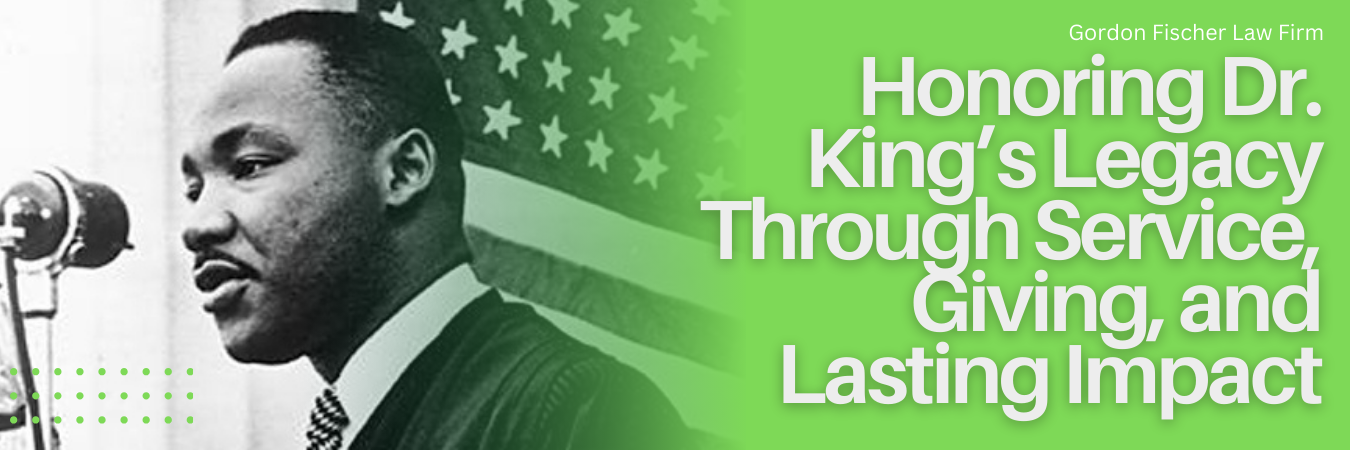
I believe it’s important to pay tribute to a man who profoundly championed equity, freedom, peace, and justice. Dr. Martin Luther King, Jr. was not only a visionary leader, but also a tireless advocate for nonviolent action and peaceful solutions to deeply rooted human rights issues. His productivity alone is staggering—he reportedly wrote five books and delivered hundreds of speeches in a single year, more than most of us will produce in a lifetime.

Dr. King’s leadership was instrumental in shaping the modern civil rights movement and influencing the passage of the Civil Rights Act of 1964. That same year, he was awarded one of the world’s highest honors, the Nobel Peace Prize, for his “dynamic leadership of the Civil Rights movement and steadfast commitment to achieving racial justice through nonviolent action.” In a powerful reflection of his values, Dr. King donated the entire prize—$54,123—to support the civil rights movement.

While we often remember Dr. King primarily for his work advancing racial justice, his vision for a better America was far broader. He spoke passionately about poverty, health care, economic justice, and women’s rights, always grounding his advocacy in a belief that real change required both moral courage and collective action. His public career lasted just twelve years—from the Montgomery bus boycott in 1956 to the sanitation workers’ strike in Memphis, where he was assassinated in 1968 at the age of 39. And now, his impact continues to shape our nation.

I see Dr. King’s dream of a more just and compassionate world reflected every day in the work of Iowa’s nonprofit organizations. I also see it in the generosity of the donors who support them—people who believe in advancing missions that strengthen communities and expand opportunity. Many Iowans even choose to extend that support beyond their lifetimes by including charitable legacies in their estate plans.

Dr. King’s example resonates because most of us share his desire to make our own corners of the world better places to live, learn, and grow. Perhaps his insistence on “practicing what you preach” has inspired you to give more generously or more intentionally. Maybe his question—“What’s your life’s blueprint?”—has prompted you to consider starting a nonprofit or formalizing the causes you care about most. However his words have moved you, the important thing is turning inspiration into action.

Martin Luther King Jr. Day may offer a day away from work, but its deeper purpose is reflection and service. Honoring Dr. King means committing ourselves to the advancement of our communities. Hold on to this sentiment by volunteering with an organization that speaks to your heart, supporting causes through charitable giving tools like donor-advised funds, or simply identifying the nonprofits you’d like to include as beneficiaries in your will.

Leaving a legacy is one of the most meaningful things we can do. It allows our values, convictions, and influence to live on through the people and organizations we care about. While our lives may not leave a mark on history like Dr. King’s, our individual legacies are no less significant to our families, our communities, and the missions we support.

So I’ll ask the same question Dr. King posed to so many: What will your legacy be?

If you’d like to explore charitable giving or legacy planning, don’t hesitate to contact me for a free consultation. As Dr. King reminded us, “The time is always right to do what is right.”

To revisit Dr. King’s “I Have a Dream” speech, watch the video below:


Setting Pay the Right Way: Why Your Nonprofit Needs a Clear Compensation Policy

January 14, 2026

I. INTRODUCTION

Setting compensation for employees and contractors is a core task for any nonprofit. These decisions affect people, finances, and public trust, which is why they should be guided by a clear and consistent Compensation Policy. Because compensation decisions are closely tied to a nonprofit’s tax-exempt status and governance obligations, they are also subject to regulatory scrutiny. The IRS underscores this importance by addressing compensation and compensation practices in multiple sections of Form 990.

A well-designed Compensation Policy helps organizations approach these decisions deliberately and with appropriate oversight, setting the stage for the standards discussed below.

II. WHY HAVE A COMPENSATION POLICY?

A. Employee Care and Morale

Every organization, regardless of size or success, is built on the individuals who carry out its mission. Fair and competitive compensation plays a critical role in employee satisfaction, retention, and morale. Competitive wages allow a nonprofit to attract qualified candidates and build a team that aligns with the organization’s values and goals.

B. Donor Confidence

Donors care not only about a nonprofit’s mission, but also about how that mission is carried out. Compensation practices are one area where donors may look for signs of ethical management and responsible stewardship of resources. A clear and organized Compensation Policy helps demonstrate that the organization takes its obligations seriously, including in how employees are compensated and supported.

C. Consistency

A written Compensation Policy promotes consistency by establishing guidelines, pay standards, and the use of comparability data. This structure reduces the need for ad hoc decision-making and helps save time and administrative resources. The policy can also serve as a helpful reference when responding to questions from donors, employees, or prospective hires, keeping the nonprofit’s messaging consistent.

D. Budget Targeting

Nonprofits operate within defined budgets, which may include restricted funds such as government or corporate grants. A well-drafted Compensation Policy helps ensure that compensation decisions align with budgetary constraints while still supporting recruitment and retention goals.

E. Legal Compliance and Reduced Risks of Lawsuit

A Compensation Policy also supports compliance with state and federal employment laws and plays a role in maintaining tax-exempt status. IRS Form 990 requests compensation-related information in multiple sections, including Part I, Part VI, Part VII, Part IX, and Schedule J. Without a structured policy, nonprofits may face increased risk of disputes or claims of unfair treatment. Having an attorney assist with drafting and periodically reviewing a Compensation Policy can significantly reduce legal and operational risks.

III. WHAT A COMPENSATION POLICY SHOULD INCLUDE

A. Purpose and Scope

A Compensation Policy, like most policies, should explain its own purpose and scope. It should state which forms of compensation it covers and should declare those forms of compensation to be reasonable, fair, and supported by appropriate data. It should also tie compensation back to the organization’s mission and public-charity status.

B. Assignment of Responsibility

A Compensation Policy should clearly identify who is responsible for reviewing and approving compensation decisions. Many organizations delegate this responsibility to a finance committee or similar body, with ultimate oversight resting with the board of directors.

C. Use of Comparability Data

An equitable Compensation Policy relies on comparability data to establish reasonable compensation levels. Comparability data should include, but not be limited to, the following:

1. Salary and benefit studies from independent sources;
2. Written job offers for similar positions at similar organizations (similar in ways like asset
size, geographic location, mission, staff, and services);
3. Documented discussions with similar nonprofit or for-profit organizations; and
4. Information obtained from IRS Form 990 filings of comparable organizations.

All compensation decisions, including the data relied upon and any deviations from it, should be documented and retained in the organization’s records.

D. Conflicts Of Interest

Any board member or member of a finance or similar committee with the power to make compensation-related decisions should, of course, recuse themselves from doing so when they stand to make a personal benefit, such as deciding their own salary, or the salary of a spouse or close family member. While these situations should be majorly addressed in a separate Conflict of Interest Policy, reiterating this requirement in the Compensation Policy helps avoid even the appearance of impropriety.

E. Documentation and Transparency

All compensation decisions should be documented in a timely and consistent manner. A Compensation Policy should promote this by defining documentation practices and standards. Clear records support accountability and compliance with reporting obligations.

F. Periodic Review

As with other key governance policies, a Compensation Policy should be reviewed and approved initially by the board of directors. However, it’s incredibly important that the board is not only involved in the creation of the policy, but also in the maintenance of it. Because it will undoubtedly need updating at some point, the Compensation Policy should address its own amenability, including the specifics of who and under what circumstances it can be reviewed or updated.

IV. CONCLUSION

Nonprofits of all sizes benefit from a clear, equitable Compensation Policy. It provides guidance for leadership, reassurance for employees, transparency for donors, and support for compliance and reporting obligations.

If you’d like guidance on drafting, updating, or reviewing your Compensation Policy, I’m happy to help. Reach out anytime at gordon@gordonfischerlawfirm.com to start the conversation. I offer a free consultation!

January 12, 2026

10 Policies Every Nonprofit Should Have in Place

I. IRS FORM 990

Every nonprofit, every year, must complete and file a version of Form 990, which the IRS calls its “Return of Organization Exempt From Income Tax.” The long version of IRS Form 990 asks about many financial matters, including but not limited to donations, money on hand, non-cash assets, and breakdowns of expenses.

IRS Form 990 goes even further and asks nonprofits if they have in place certain policies. In fact, the IRS asks about ten (10) specific policies on Form 990. The IRS does not mandate adopting these ten (10) policies. The IRS is at the very least signaling what policies nonprofits should have in place. This helps show nonprofits what the IRS considers to be best practices.

II. REASONS AND BENEFITS TO ADOPT THESE TEN (10) POLICIES

One might ask, if these policies are not absolutely required, why should a nonprofit invest the time and effort to adopt them? Without clear and properly enforced governance policies, an Iowa nonprofit may face regulatory scrutiny, potential penalties, and reputational harm that can negatively impact donor confidence and fundraising efforts. Beyond risk management, these ten (10) policies provide substantial and practical benefits for nonprofits, including but not limited to the following:

  • Enhanced confidence among donors and other stakeholders.
  • A consistent framework for sound decision making.
  • Improved compliance with federal and state laws.
  • Reduced risk to the nonprofit and its management and governing board.

The existence of a policy does not, by itself, guarantee compliance. However, having written policies in place establishes expectations and provides guidance for board members, employees, donors, volunteers, and other stakeholders. When issues arise, these policies serve as a clear reference point for addressing concerns in a consistent and responsible manner. Another important reason to adopt these policies is that the IRS audits tax exempt nonprofits. Having appropriate governance policies in place can benefit a nonprofit during an audit by demonstrating a commitment to transparency, accountability, and compliance. In addition, well drafted policies provide a solid foundation for soliciting, accepting, and managing charitable donations.

Finally, Form 990 is publicly available and often reviewed by major donors, foundations, and other stakeholders. When completed thoughtfully, it can serve as a valuable public relations tool that reflects a nonprofit’s commitment to good governance, financial responsibility, and alignment with its mission.

III. WHAT POLICIES ARE WE TALKING ABOUT?

The IRS revised Form 990 in 2008. The old version focused largely on financial data. Now Form 990 reports extensive information on operations such as board governance, fundraising, non-cash assets, and more. Below are the ten (10) policies in alphabetical order.

  1. COMPENSATION

Competitive and fair compensation is just as important for nonprofit employees as it is for employees in the for profit sector. A well written compensation policy establishes objective salary ranges for positions, incorporates updated job descriptions, and outlines performance management and evaluation standards.

A strong compensation policy should also include a statement of compensation philosophy and strategy, explaining how compensation practices support the nonprofit’s mission and values. By setting clear and consistent guidelines, this policy promotes fairness, transparency, and accountability in how employees and executives are compensated.

Panoramic image, Man hand holding piggy bank on wood table. Save money and financial investment

  1. CONFLICT OF INTEREST

A conflict of interest policy serves two essential purposes. First, it requires board members, officers, and key employees to disclose any actual or potential conflicts. Second, it ensures that individuals with a conflict are excluded from voting on matters in which they have a personal or financial interest.

Form 990 defines a conflict of interest as a situation in which a person in a position of authority can benefit financially from a decision, including indirect benefits to family members or closely associated businesses. A clear and well enforced conflict of interest policy helps protect the nonprofit’s integrity, promotes ethical decision making, and reduces the risk of regulatory and legal sanctions by ensuring that conflicts are properly disclosed, evaluated, and managed in a transparent and ethical manner.

  1. DOCUMENT RETENTION AND DESTRUCTION

A document retention and destruction policy explains what types of records should be retained, how they should be stored, and how long they must be kept. It also outlines appropriate methods for the secure destruction of documents that are no longer required. This policy helps ensure that important financial, employment, contract, and governance records are preserved for legal, tax, and regulatory purposes. In addition to supporting compliance, a clear document retention policy helps nonprofits manage storage efficiently, reduce unnecessary record keeping, and respond appropriately if litigation, audits, or government investigations arise.

  1. FINANCIAL POLICIES AND PROCEDURES

Financial policies and procedures guide how a nonprofit manages its finances on a day to day basis. These policies address budgeting, financial reporting, internal controls, account management, and audit practices. They also establish expectations for transparency, accuracy, and responsible stewardship of nonprofit funds. By providing a consistent framework for financial decision making, these policies help protect the organization’s assets, support regulatory compliance, and promote confidence among donors, board members, and other stakeholders.

  1. FORM 990 REVIEW

Form 990 asks whether a complete copy of the return is provided to all members of the governing body before it is filed. A Form 990 review policy outlines how and when the return is distributed to board members and describes the process used to review the information for accuracy and completeness.

This policy encourages accountability and informed oversight by the board of directors. It also helps ensure that leadership understands the information being reported to the IRS and the public, reducing the risk of errors and misunderstandings.

Form 990 Return of Organization Exempt From Income Tax inscription on the sheet.

  1. FUNDRAISING

Almost every nonprofit engages in some form of charitable fundraising. A fundraising policy addresses compliance with local, state, and federal laws, as well as the ethical standards the nonprofit chooses to follow in its fundraising efforts.

This policy should also clarify appropriate practices for both soliciting and receiving donations. By establishing clear guidelines, a fundraising policy promotes transparency, accountability, and donor confidence while helping the nonprofit conduct its fundraising activities responsibly.

  1. GIFT ACCEPTANCE

While related to the fundraising policy, the gift acceptance policy focuses on how a nonprofit evaluates and manages certain types of donated assets. This policy provides clear guidance for board members and staff when considering proposed non-cash donations, including real estate, equipment, or other complex assets.

A well drafted gift acceptance policy also helps a nonprofit identify and decline gifts that may carry unwanted liabilities, restrictions, or ongoing obligations that the organization is not prepared to manage. This protects the nonprofit from financial, legal, and operational risks associated with unsuitable donations.

  1. INVESTMENT

An investment policy defines who is responsible for making investment decisions and how the nonprofit’s assets will be managed, protected, and grown. It also establishes guidelines for risk management, diversification, and maintaining appropriate access to cash when needed.

By outlining both management authority and board oversight, an investment policy helps ensure that financial resources are used prudently and in furtherance of the nonprofit’s mission. It also promotes long term financial stability and responsible stewardship of charitable assets.

  1. PUBLIC DISCLOSURE

A public disclosure policy explains which nonprofit documents must be made available to the public and which may remain internal. Certain records, such as governing documents, financial statements, and Form 990, are often subject to public inspection.

This policy helps ensure compliance with disclosure requirements while allowing the nonprofit to maintain appropriate confidentiality for sensitive internal information. It also supports transparency and public trust.

  1. WHISTLEBLOWER

A whistleblower policy establishes a process for reporting suspected illegal conduct, financial mismanagement, or violations of nonprofit policies. It also protects individuals who report concerns from retaliation.

By encouraging staff and volunteers to raise issues in good faith, this policy helps nonprofits identify and address problems early, promote ethical behavior, and reduce the risk of legal or regulatory violations.

IV. CONCLUSION

With passion leading the way and strong policies guiding your efforts, your nonprofit can operate more effectively, ethically, and confidently. These ten (10) policies help protect, strengthen, and support your organization’s long term success.

Clear and well drafted governance policies provide a framework for responsible decision making, promote transparency and accountability, and help ensure compliance with federal and state law. They also build trust with donors, volunteers, and the communities your nonprofit serves.

If your organization does not yet have these ten (10) policies in place, or if your current policies need to be updated, I can help. I offer customized drafting of all ten (10) policies for Iowa nonprofits.

To learn more, please contact me at gordon@gordonfischerlawfirm.com.

January 6, 2026

The Ultimate Guide to Bylaws for Iowa Nonprofits

Bylaws are one of the most misunderstood documents in the nonprofit world. They are often treated as paperwork to be copied from a template, adopted once, and forgotten. In reality, Bylaws quietly control how power is exercised, how decisions are made, and how conflict is resolved inside a nonprofit organization. Well-drafted Bylaws make governance feel manageable and predictable. Poorly-drafted Bylaws create confusion, gridlock, and risk, often at the worst possible moments. Leadership transitions, internal disputes, audits, grant reviews, or periods of rapid growth are usually when bylaw problems surface.

This guide is designed to help Iowa nonprofits understand what Bylaws are, why they matter, what Iowa law expects, and how to approach them thoughtfully and confidently.

What Bylaws Are

Bylaws are the internal rules that govern how a nonprofit operates day to day. They describe how authority is exercised, how decisions are made, and how leadership functions in practice. In
short, Bylaws explain how the organization runs once it exists. They function as the organization’s operating manual. When questions arise about who has authority, how decisions are approved, or what process must be followed, the Bylaws are the first place to look.

What Bylaws Are Not

Bylaws do not create the nonprofit. That role belongs to the Articles of Incorporation, which establish the organization as a legal entity and are filed with the Iowa Secretary of State. Bylaws are not filed with the state. Instead, they are adopted by the governing body and kept with the organization’s internal records. They are meant to be used, consulted, and relied upon
regularly.

Think of the Articles as defining the organization’s outer legal boundaries. The Bylaws then step inside those boundaries and explain how the organization actually functions.

Iowa Law and Nonprofit Bylaws

Iowa nonprofit corporations are governed by the Revised Iowa Nonprofit Corporation Act, found in Iowa Code Chapter 504. While the statute does not require nonprofits to file their Bylaws with
the state, it assumes that Bylaws exist and that they address core governance fundamentals.

Iowa’s Default Rules and Why They Matter

Iowa law does not provide a detailed checklist of required bylaw provisions. Instead, it sets default rules that apply unless the Bylaws say otherwise. This flexibility is intentional, but it places responsibility on the organization to make deliberate choices.

If Bylaws are silent on an issue, Iowa’s default rules control. Sometimes those defaults are appropriate. Other times, they do not reflect how the board expects to operate or how the organization actually functions.

The Legal Authority for Bylaws

Iowa Code Section 504.206 allows Bylaws to contain any provision for regulating and managing the affairs of a corporation that is not inconsistent with law or the Articles of Incorporation. This
is where most governance decisions are made in practice. Thoughtful Bylaws allow an organization to customize governance while remaining fully compliant with Iowa law.

IRS Expectations and Bylaws

The Internal Revenue Service does not require nonprofits to submit Bylaws when forming a corporation. However, when an organization applies for tax exempt status, any adopted Bylaws
are typically included with the application and may be reviewed. The IRS does not mandate specific bylaw language. Instead, it looks for evidence of sound governance practices that support the organization’s charitable purpose. The questions on Form 1023 reflect these expectations.

Well-drafted Bylaws help demonstrate that a nonprofit is governed responsibly, that authority is properly exercised, and that safeguards exist to prevent private benefit or misuse of charitable
assets.

Business concept meaning Form 1023 Application for Recognition of Exemption Under Section 501(c)(3) of the Internal Revenue Code with inscription on the sheet.

Core Provisions Every Iowa Nonprofit Bylaws Should Address

Bylaws are where governance becomes operational. Some provisions are essential for basic functionality and oversight, while others provide clarity and protection as the organization
grows.

Charitable Purpose and Tax Exempt Limitations

Bylaws often restate the organization’s charitable purpose and include restrictions related to private inurement, political activity, and prohibited conduct. This reinforces alignment with federal tax exempt requirements and keeps governance focused on mission.

Board Authority and Governance Role

Bylaws should clearly establish that the board of directors is responsible for managing and overseeing the nonprofit. This includes policy setting, fiduciary oversight, and strategic direction.

Board Size, Qualifications, and Terms

These provisions define who may serve as a director, how many directors may serve, how long they serve, and how turnover is handled. Clear rules reduce uncertainty and help maintain continuity.

Meetings, Quorum, and Voting

Bylaws establish how and when meetings occur, what constitutes a quorum, how votes are taken, and whether electronic participation is permitted. These rules determine when board action is
valid.

Director Accountability and Removal

Clear procedures for resignation, removal, attendance expectations, and vacancies support effective oversight and provide a roadmap when governance challenges arise.

Officers and Executive Authority

Bylaws should identify officer roles, selection procedures, term lengths, and authority. This helps maintain clarity between governance and management responsibilities.

Committees and Delegation Limits

Committee provisions define what authority may be delegated and what decisions must remain with the full board. This prevents unintended delegation of core responsibilities.

Optional but Strategic Bylaw Provisions

Many nonprofits include additional provisions that add protection, flexibility, and clarity over time. These provisions often address topics such as executive leadership structure, fiduciary standards, compensation and reimbursement safeguards, limitation of liability, indemnification, amendment procedures, and dissolution approval requirements. While optional, these provisions frequently become critical during periods of growth, leadership transition, or conflict.

Board Managed and Member Managed Nonprofits in Iowa

One of the most important and commonly misunderstood aspects of nonprofit governance is whether an organization has members. Most Iowa nonprofits are board managed and do not have statutory members. In these organizations, the board holds ultimate authority.

Some nonprofits intentionally create members with voting rights. This can be appropriate in certain circumstances, but it significantly changes governance dynamics and approval requirements.
A common problem arises when Bylaws unintentionally create members through imprecise language. This can result in unexpected voting rights or approval thresholds the board never intended.
If an organization does not intend to have members, the Bylaws should say so clearly and explicitly.

How Bylaws Fit Into a Healthy Governance System

Bylaws do not stand alone. They exist within a hierarchy of governing documents. The Articles of Incorporation sit at the top. Beneath them are the Bylaws. Supporting both are board adopted policies and procedures. These documents should work together. When they do not, confusion and risk follow. Conflicting provisions can raise questions about authority, validity of actions, and compliance. Strong governance treats Bylaws as part of an integrated system, not as an isolated document.

Common Bylaw Mistakes Iowa Nonprofits Encounter

Many bylaw problems do not stem from a single bad clause. They arise from practical mismatches between written rules and real world operations. Common issues include:

• Using Bylaws copied from another state
• Creating unintended members
• Adopting procedures that do not match actual practice
• Allowing Bylaws to drift out of alignment with Articles
• Layering amendments instead of adopting restated Bylaws

Templates can be a helpful starting point, but they rarely produce Bylaws that truly fit an organization without thoughtful customization.

Adopting, Amending, and Restating Bylaws

Bylaws are typically adopted by the board at the initial organizational meeting. Once adopted, they should be kept with the organization’s records and reviewed periodically.

As organizations evolve, Bylaws often need to be updated. In many cases, adopting restated Bylaws that consolidate all changes into a single clean document is preferable to layering amendments over time. Clear amendment procedures help ensure that changes are deliberate, properly approved, and well documented.

When Iowa Nonprofits Should Consider Updating Their Bylaws

Certain moments often signal that Bylaws deserve attention. These include leadership changes, organizational growth, IRS reinstatement, internal conflict, grantmaker requests, or major structural changes such as mergers or dissolutions. Addressing Bylaws proactively is almost always easier and less costly than fixing problems after
they surface.

Final Thoughts

Bylaws are not busywork. They are a practical tool that supports effective governance, clear decision making, and organizational stability. When drafted thoughtfully, Bylaws reduce uncertainty and help nonprofit leaders focus on mission rather than mechanics. When neglected, they can quietly undermine even the best intentions. I have worked with hundreds of Iowa nonprofits to draft, update, and align Bylaws with how organizations actually operate and where they are headed. If you are creating new Bylaws, revisiting old ones, or simply want clarity about what yours really say, I am always happy to talk.

Good governance is achievable. And it starts with getting the fundamentals right.

Frequently Asked Questions About Iowa Nonprofit Bylaws

Do nonprofit Bylaws have to be filed with the state of Iowa?

No. Bylaws are internal governing documents and are not filed with the Iowa Secretary of State. They should be adopted by the board and kept with the organization’s records.

Are nonprofit Bylaws legally binding?

Yes. Bylaws are binding on the organization and its directors and officers. Boards are expected to follow them, and deviations can create legal and governance risk.

Can a board ignore its Bylaws if everyone agrees?

Generally no. Even unanimous agreement does not override the Bylaws. If a provision no longer works, the proper solution is to amend or restate the Bylaws.

How often should Iowa nonprofits review their Bylaws?

As a best practice, Bylaws should be reviewed periodically, often every two to three years, and whenever there is significant growth, leadership change, or organizational restructuring.

Who has the authority to amend nonprofit Bylaws in Iowa?

In most Iowa nonprofits, the board of directors has authority to amend the Bylaws, unless the Articles of Incorporation or Bylaws reserve that power to members.

What happens if Bylaws conflict with the Articles of Incorporation?

The Articles of Incorporation control. Bylaws that conflict with the Articles or with Iowa law can be unenforceable and should be corrected.

Do small nonprofits really need formal Bylaws?

Yes. Size does not eliminate the need for clear governance rules. In fact, smaller organizations often benefit the most from well drafted Bylaws.

Email Me!

My email is:
gordon@gordonfischerlawfirm.com

####