Posts

February 4, 2026

Nonprofit leaders are expected to manage so much, but one responsibility that should never be overlooked is managing conflicts of interest. A strong Conflict of Interest Policy protects your organization, your board, and the public trust.


Why Conflict of Interest Policies Matter

In a nonprofit organization, a conflict of interest arises when someone involved with the organization has a personal interest that could interfere — or appear to interfere — with the organization’s best interests.

While these situations may seem routine, failing to address them appropriately can:

  • Undermine public confidence

  • Damage your organization’s reputation

  • Expose your nonprofit to legal and governance risk

A clear policy helps prevent problems before they arise.


What Is a Conflict of Interest?

A conflict of interest generally occurs when an individual:

  • Stands to benefit personally from a decision made by the nonprofit, or

  • Has a relationship with a person or business that could influence the organization’s actions

For example, a board member with a financial interest in a vendor being considered by the nonprofit must disclose that relationship and step back from the decision-making process.


What a Strong Policy Should Do

A well-drafted Conflict of Interest Policy brings clarity and consistency to how your nonprofit operates. At a minimum, it should:

  • Clearly define what constitutes a conflict of interest

  • Explain how and when conflicts must be disclosed

  • Outline how disclosed conflicts are reviewed

  • Describe how conflicts are managed or resolved

  • Require documentation of decisions and actions taken

This structure supports ethical decision-making and demonstrates accountability.


IRS Guidance and Best Practices

Although the IRS does not require nonprofits to have a Conflict of Interest Policy to maintain tax-exempt status, it does ask on IRS Form 990 whether your organization has adopted one.

That question alone signals that the IRS views conflict policies as a governance best practice — and donors, regulators, and the public often do as well.


Key Elements to Include

To be effective, your policy should address:

  • When disclosures must be made (such as before votes or contracts)

  • Who reviews potential conflicts

  • Whether recusal from discussion or voting is required

  • How decisions are documented and retained

Consistency and transparency are essential — even when no actual conflict exists.

Conflict of Interest Policies only work when they are used.

Adopting a policy is the first step. Boards should revisit disclosures regularly, document decisions carefully, and treat conflicts as a normal governance issue. Its not meant to be treated like a personal failing.


Final Takeaway

A Conflict of Interest Policy is a practical tool for protecting your mission, your leadership, and your credibility.

By adopting and enforcing a thoughtful policy, your nonprofit signals its commitment to integrity, accountability, and responsible governance.


Need Help Drafting or Updating Your Policies?

The Gordon Fischer Law Firm works with nonprofits to draft, revise, and tailor the ten governance policies referenced on IRS Form 990 — including Conflict of Interest Policies — to fit your organization’s mission and operations.

📧 Email: gordon@gordonfischerlawfirm.com
January 19, 2026

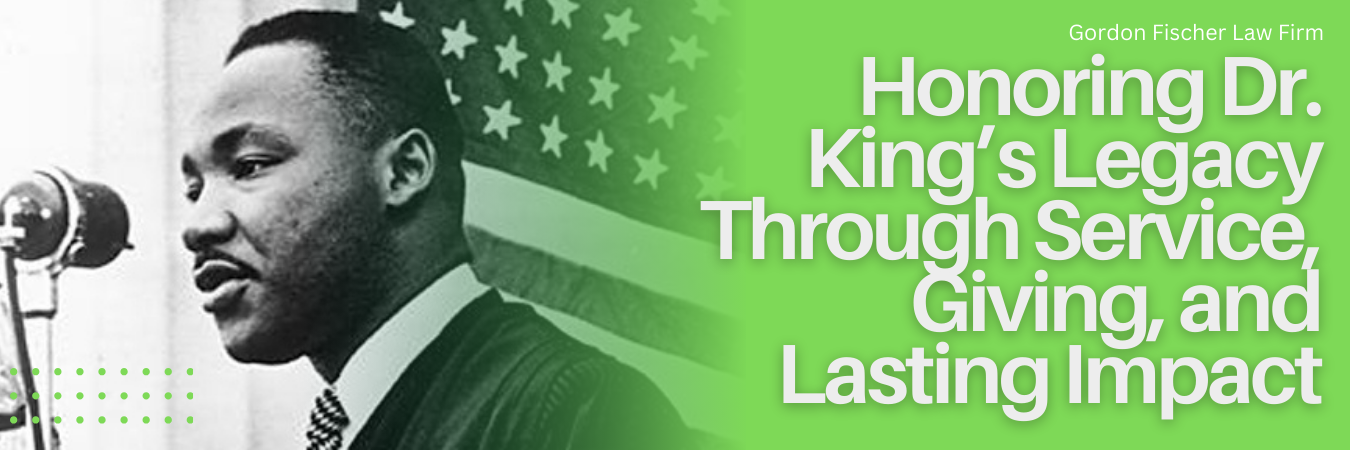
I believe it’s important to pay tribute to a man who profoundly championed equity, freedom, peace, and justice. Dr. Martin Luther King, Jr. was not only a visionary leader, but also a tireless advocate for nonviolent action and peaceful solutions to deeply rooted human rights issues. His productivity alone is staggering—he reportedly wrote five books and delivered hundreds of speeches in a single year, more than most of us will produce in a lifetime.

Dr. King’s leadership was instrumental in shaping the modern civil rights movement and influencing the passage of the Civil Rights Act of 1964. That same year, he was awarded one of the world’s highest honors, the Nobel Peace Prize, for his “dynamic leadership of the Civil Rights movement and steadfast commitment to achieving racial justice through nonviolent action.” In a powerful reflection of his values, Dr. King donated the entire prize—$54,123—to support the civil rights movement.

While we often remember Dr. King primarily for his work advancing racial justice, his vision for a better America was far broader. He spoke passionately about poverty, health care, economic justice, and women’s rights, always grounding his advocacy in a belief that real change required both moral courage and collective action. His public career lasted just twelve years—from the Montgomery bus boycott in 1956 to the sanitation workers’ strike in Memphis, where he was assassinated in 1968 at the age of 39. And now, his impact continues to shape our nation.

I see Dr. King’s dream of a more just and compassionate world reflected every day in the work of Iowa’s nonprofit organizations. I also see it in the generosity of the donors who support them—people who believe in advancing missions that strengthen communities and expand opportunity. Many Iowans even choose to extend that support beyond their lifetimes by including charitable legacies in their estate plans.

Dr. King’s example resonates because most of us share his desire to make our own corners of the world better places to live, learn, and grow. Perhaps his insistence on “practicing what you preach” has inspired you to give more generously or more intentionally. Maybe his question—“What’s your life’s blueprint?”—has prompted you to consider starting a nonprofit or formalizing the causes you care about most. However his words have moved you, the important thing is turning inspiration into action.

Martin Luther King Jr. Day may offer a day away from work, but its deeper purpose is reflection and service. Honoring Dr. King means committing ourselves to the advancement of our communities. Hold on to this sentiment by volunteering with an organization that speaks to your heart, supporting causes through charitable giving tools like donor-advised funds, or simply identifying the nonprofits you’d like to include as beneficiaries in your will.

Leaving a legacy is one of the most meaningful things we can do. It allows our values, convictions, and influence to live on through the people and organizations we care about. While our lives may not leave a mark on history like Dr. King’s, our individual legacies are no less significant to our families, our communities, and the missions we support.

So I’ll ask the same question Dr. King posed to so many: What will your legacy be?

If you’d like to explore charitable giving or legacy planning, don’t hesitate to contact me for a free consultation. As Dr. King reminded us, “The time is always right to do what is right.”

To revisit Dr. King’s “I Have a Dream” speech, watch the video below:

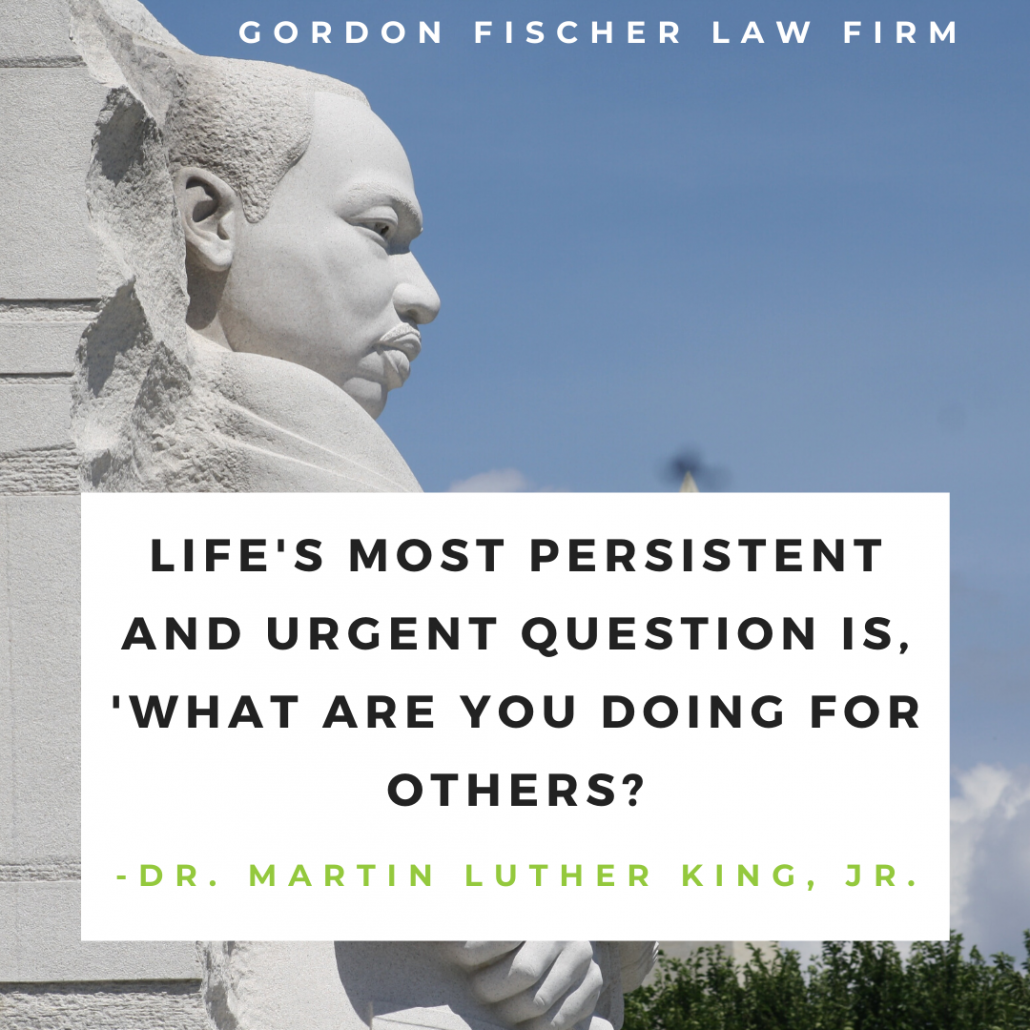
Dr. Martin Luther King Jr memorial

Today we celebrate Dr. Martin Luther King, Jr. and his passion, constancy, and determination in making America live up to its professed ideals and fulfill “the promise that all men, yes, black men as well as white men, would be guaranteed the unalienable rights of life, liberty, and the pursuit of happiness.” His powerful impact belies the brevity of his life—a public career that lasted just a dozen years, from the Montgomery, Alabama, bus boycott in 1956 to the sanitation workers’ strike in the Memphis, Tennessee where he was assassinated in 1968 at the age of 39.

When we think of Dr. King, it’s often of his tireless campaign for racial justice, but that is shortchanging his all-encompassing vision for a better America involving poverty, health, and women’s rights. The social justice reforms he championed and his commitment to nonviolent direct action in order to achieve them led to his receiving the Nobel Peace Prize in 1964. Notably, he donated the entirety of his award — $54,123—to the civil rights movement.

I see Dr. King’s examples of generosity and commitment to the betterment of our world being practiced every day by Iowans who support the nonprofit organizations in their communities through charitable giving. Many ensure their support will continue after even after death, by creating estate plans that include legacies for their favorite charities.

Leaving a legacy is one of the most important things we can do in life because it enables us to carry our influence, our values, and our convictions into the future. Our lives may not have the kind of profound historical impact of Dr. King’s, but our individual legacies are no less consequential to the people we love and the organizations whose missions we care about. What will your legacy be?

What will your legacy be? Don’t hesitate to contact me for a free charitable giving consultation. As Dr. King said: “The time is always right to do what is right.”